
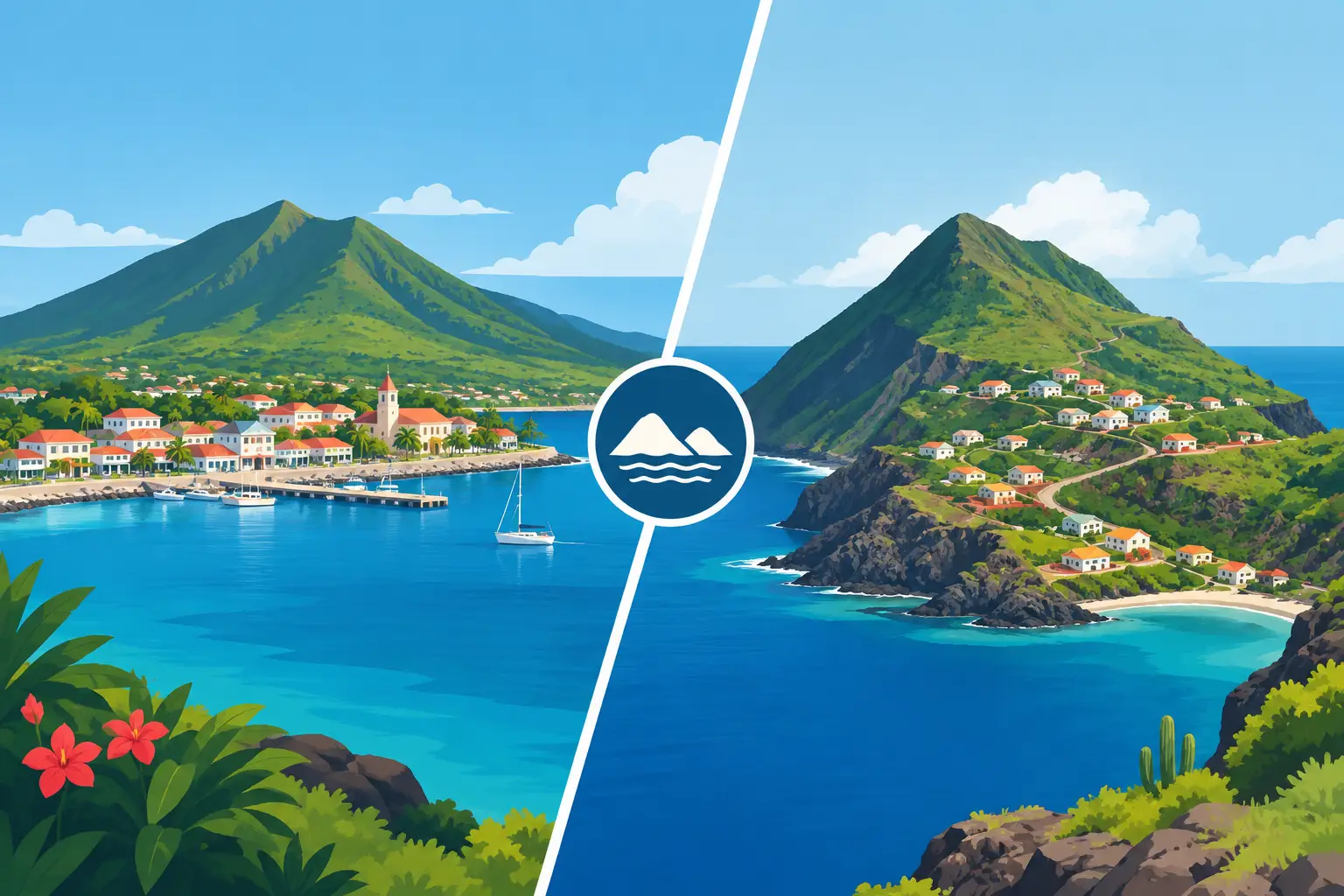
A flight into these neighboring Dutch Caribbean islands makes one thing clear: this is not the Caribbean of vast lobbies, wristbands, and crowded beach strips. St Eustatius versus Saba is a choice between two deeply individual places - both volcanic, green, and refreshingly outside the resort circuit - with distinctly different rewards once you arrive.
Saba rises abruptly from the sea, its slopes folded into cloud forest and its villages tucked high above the water. St. Eustatius, often called Statia, feels broader and more layered: a quiet island of volcanic trails, protected reefs, old stone walls, and a former trading port whose history still shapes the landscape. Neither is a substitute for the other. The right island depends on what you want your days to hold.
St Eustatius versus Saba at a Glance
Choose Saba if your ideal Caribbean escape is steep, dramatic, and centered on mountain scenery. Its compact terrain and striking roadways create a feeling of being suspended between sea and sky. It is especially compelling for hikers who want a challenging ascent of Mount Scenery and divers drawn to pinnacles, walls, and deep blue water.
Choose St. Eustatius if you want more room to settle into the island, more visible history, and a wider mix of land and sea experiences. The Quill volcano anchors the south, while the northern hills, quiet bays, and historic Lower Town give the island a varied sense of scale. It suits travelers who enjoy a morning underwater, an afternoon on a trail or among ruins, and an unhurried dinner where the welcome feels personal rather than performed.
For many independent travelers, Statia is the easier choice for a week-long stay. Saba can be wonderfully intense for several days, while St. Eustatius has a little more range for those who prefer not to repeat the same rhythm every day.
The Landscape: Dramatic Peaks or a Volcanic Island With Range?
Saba is the more immediately vertical island. The road from the harbor climbs into villages such as Windwardside, where gingerbread-style cottages, tropical gardens, and misty ridgelines create an almost improbable setting. The Mount Scenery trail is the signature experience. It is rewarding, but it is not a casual stroll: steep steps, changing weather, and slippery sections call for solid footwear and a realistic sense of fitness.
St. Eustatius offers a gentler variety of volcanic terrain, even when the trails themselves can be demanding. Hiking the Quill brings you through dry forest and lush vegetation toward the crater rim, with guided options available for routes where local knowledge adds both safety and meaning. In the north, the Boven National Park feels wilder and more open, with views over cliffs, coastline, and the neighboring islands on a clear day.
The difference is less about which island is more beautiful than about the kind of beauty you want. Saba concentrates its drama upward. Statia lets it unfold gradually - from the rim of The Quill to the quiet shoreline below, from open hillsides to the weathered remains of a once-global port.
Diving and Snorkeling: Two Strong, Different Underwater Worlds
Both islands are serious destinations for divers, and both reward travelers who care about marine conservation more than underwater crowds. Their protected waters tend to feel uncrowded, locally guided, and shaped by the conditions of the day rather than a fixed mass-tourism schedule.
Saba is renowned for underwater pinnacles and dramatic formations rising from deep water. Advanced divers and confident recreational divers often come for the topography: volcanic spires, walls, and the possibility of encountering larger pelagic life in the blue. Conditions and sites vary, so choosing an operator that matches your experience level matters.
St. Eustatius offers exceptional reef diving with a different character. Healthy coral formations, volcanic structures, wrecks, and a rich range of marine life create dives that are both visually rewarding and full of small discoveries. The island’s marine park is one of its rare rewards, particularly for divers who prefer attentive guiding and a sense that the reef is still allowed to be itself.
Snorkelers should plan with care on either island. These are volcanic islands, not destinations built around long, sheltered, white-sand swimming beaches. On Statia, protected bays and guided local advice can help you make the most of the water. On Saba, shore access can be more limited and conditions can change quickly. If snorkeling is your main priority, ask locally about the day’s sea state rather than assuming every beach is suitable.
History and Local Character
This is where St. Eustatius takes a clear lead. The island’s story is not a background detail. It is visible in Oranjestad, where Upper Town and Lower Town hold the remains of warehouses, churches, homes, fortifications, and trade-era streets. From the 18th century, Statia became one of the Caribbean’s busiest free ports, a small island with a remarkably large role in Atlantic commerce.
Fort Oranje, overlooking the bay, is an essential starting point. Nearby, the historic streets and ruins invite a slower kind of exploration - one that asks you to notice what remains, what has been restored, and what the sea-facing town once witnessed. The island’s connection to the early United States also adds another layer for American visitors, but the deeper value lies in how history is embedded in the place itself.
Saba has heritage too, expressed through its villages, traditional architecture, maritime past, and close-knit community. It feels intimate and beautifully maintained rather than monumental. Travelers looking for a living mountain village atmosphere may feel especially at home there. Travelers who want to spend time among tangible colonial-era sites and broad historical narratives will find more to explore on Statia.
Stays, Dining, and the Pace of a Day
Neither island is designed for travelers seeking a menu of interchangeable resorts. Accommodations are smaller in scale, and availability can be limited during busier periods. Book early if you have particular preferences, especially for a room with a view, a dive-focused stay, or a longer visit.
Saba’s lodging often emphasizes mountain views, village charm, and a retreat-like feeling. Dining is similarly intimate. The island’s small scale means evenings can feel quiet, and that quiet is part of the appeal. Go for privacy, landscape, and the pleasure of returning to the same welcoming places.
On St. Eustatius, the stay experience is more dispersed between town, hillside, and coastal settings. There is room to build a more varied itinerary without rushing: breakfast in town, a dive boat from the harbor, a heritage walk, then dinner that runs long because there is nowhere else you need to be. Restaurants and opening hours can be limited, so confirming plans directly is sensible, particularly outside peak travel periods.
Statia is also a strong fit for travelers who like to meet the island rather than merely consume it. Conversations with dive crews, guides, hosts, and restaurant owners often become part of the trip. The island, as it feels, is best understood at that pace.
Getting There and Planning Realistically
The shared trade-off is access. Reaching either island usually involves a regional connection, most commonly through nearby Caribbean hubs. Flight and ferry schedules can change with weather, season, and operational needs, so leave buffer time around international connections and confirm transport directly before you travel.
Saba’s airport approach is famously scenic and may feel thrilling to some travelers and unnerving to others. Statia also has a small airport and a limited schedule, which is part of the experience but requires flexibility. Rental vehicles, taxis, dive reservations, guided hikes, and restaurant plans are best arranged ahead when your dates are fixed.
Pack for active days rather than resort dress codes: sturdy walking shoes, sun protection, a light rain layer, reef-safe sun care, and clothing that works for warm weather and changing conditions at higher elevations. Bring patience, too. On islands this small, a schedule is a helpful plan, not a promise.
Which Island Should You Choose?
Choose Saba for dramatic mountain scenery, challenging hiking, village character, and diving that leans toward deep-water formations. It is an excellent choice for a shorter, focused escape or for travelers who want nature to feel close at every turn.
Choose St. Eustatius for a fuller balance of diving, hiking, heritage, and quiet local life. It is especially suited to couples, curious travelers, history lovers, and divers who want to stay long enough for the island’s details to become familiar. You will not find an island trying to entertain you at every moment. You may find something better: time to notice the reef, the ruins, the changing light on The Quill, and the people who make this small island feel so unexpectedly complete.
If your itinerary allows, visiting both is a meaningful pairing. But if you choose only one, let the decision reflect the kind of Caribbean memory you want to take home: Saba’s mountain intensity, or Statia’s generous, quietly unfolding story.
