
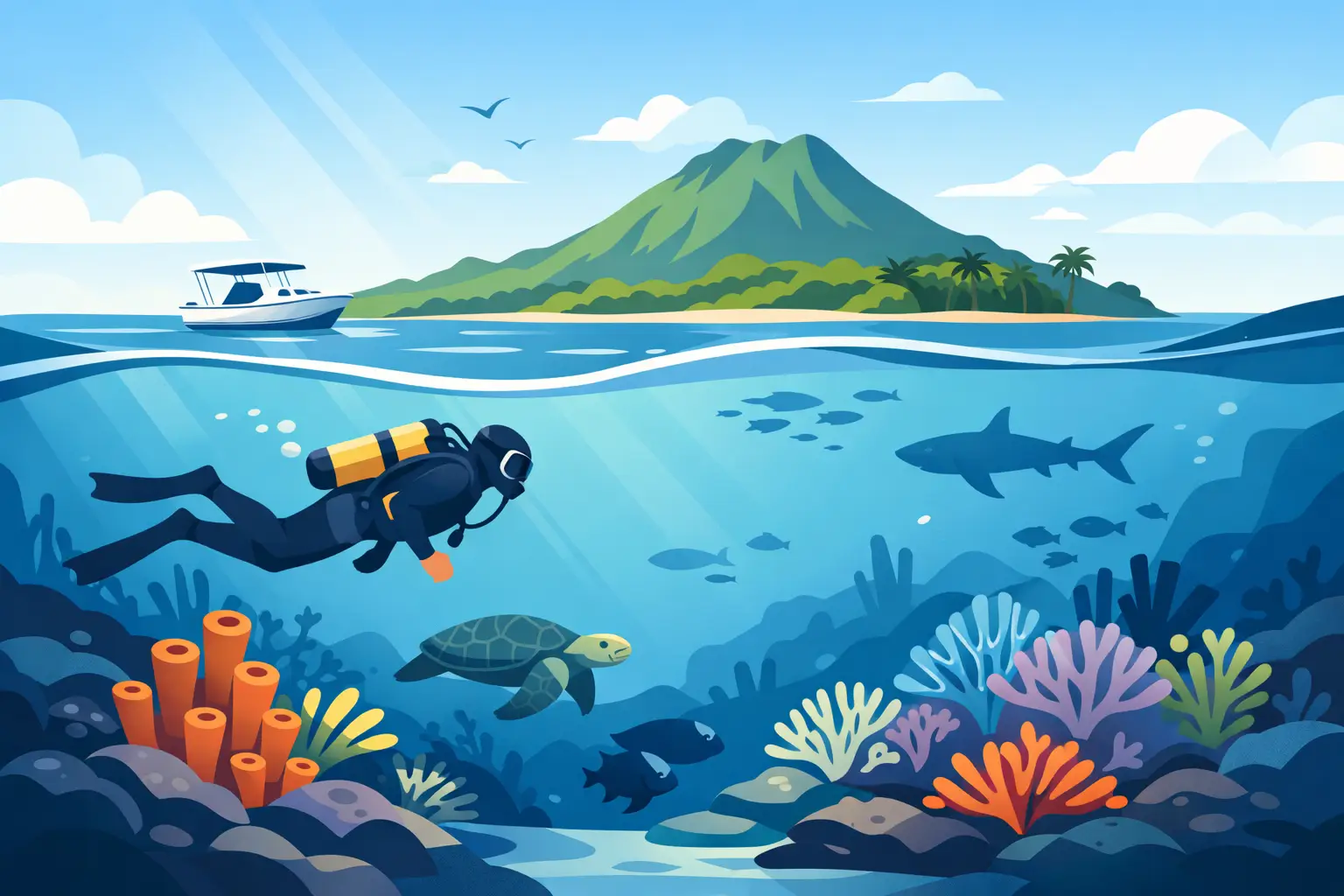
The first thing many divers notice about Statia diving is what is not there: no crowded boat decks, no procession of dive groups, no shoreline built around the next resort. Beneath the water, St. Eustatius feels remarkably intact. Volcanic slopes fall away into blue water, coral gardens hold their color, and wrecks rest quietly in a protected marine park that has long been central to the island’s identity.
This is not a destination for checking off as many dives as possible between poolside appointments. It is for travelers who want the sea to feel like a place, with changing light, local stories, and the welcome pleasure of having time to look closely.
Why Statia Diving Feels Different
St. Eustatius is a small Dutch Caribbean island with a large volcanic presence. The Quill, the island’s dormant volcano, shapes the landscape above water and helps explain the drama below it. Many dive sites are defined by lava formations, steep walls, pinnacles, and reef contours that make each descent feel distinct rather than interchangeable.
The waters surrounding the island are protected within the Statia Marine Park. That protection matters. It supports thriving reefs and abundant marine life while keeping the experience low-impact and personal. You may find schools of creole fish moving across a reef, turtles cruising through shallower water, spotted eagle rays in open blue, or a seahorse hidden where only a practiced eye would look.
Visibility is often excellent, especially during calmer conditions, but no responsible dive operator will promise the same sea every day. Wind, current, and seasonal weather shape site selection. That is part of the appeal: local guides choose the right site for the conditions rather than forcing a fixed itinerary.
The Underwater Landscape
Statia’s dive sites offer variety in a compact area, so boat rides are generally short. That leaves more room in the day for lingering over breakfast in Oranjestad, taking an afternoon walk, or simply letting the island’s unhurried rhythm take over.
Reefs, walls, and volcanic formations
Volcanic geography gives many sites their character. Some dives begin over lively shallows before descending along a slope where sponges, sea fans, and corals create layers of color. Others lead toward walls and deeper drop-offs, where the reef gives way to a wide, cobalt expanse.
These sites reward buoyancy control and patience. Instead of racing from landmark to landmark, take time near the reef edge. A long look at a sea fan may reveal a juvenile fish, a crab, or a carefully camouflaged creature that would be missed on a hurried pass.
Wrecks with a story
Wreck diving is another compelling part of the island’s underwater offering. Some wrecks were intentionally sunk to create habitat, and over time they have become part of the marine landscape rather than isolated attractions. Their surfaces attract corals, schooling fish, and the quiet sense of history that makes a wreck dive memorable.
Experience requirements vary by site, depth, and conditions. Divers who are newer to wreck environments should be candid about their training and comfort level. A good operator can recommend appropriate sites or suggest a gradual progression during a multi-day stay. For certified divers with more experience, deeper profiles may be available when conditions allow.
Who Will Love Diving on Statia
Statia is especially rewarding for independent travelers, couples, and small groups who prefer genuine time in a destination over a tightly programmed vacation. It suits divers who care about reef health and would rather know the people guiding them than follow a numbered paddle through a crowd.
It is also an excellent choice for travelers whose interests extend beyond diving. A morning underwater can be followed by a hike on the Quill, time among the historic warehouses of Lower Town, or dinner at a relaxed local restaurant. The island is small enough that experiences sit close together, yet each one feels complete.
Photographers often appreciate the uncrowded sites and long, considered pace. Macro enthusiasts can spend time searching for small subjects, while wide-angle divers have dramatic structure in volcanic formations and wrecks. What you see will depend on season, weather, depth, and a little luck, as it should.
Planning a Statia Diving Trip
A little advance planning goes a long way here. St. Eustatius is deliberately not a high-volume destination, and that means dive boats, accommodations, rental vehicles, and flights can have limited availability. Reserve early if you are traveling during a busy period or hoping to dive on specific dates.
Most visitors arrive via regional air connections, so schedules deserve careful attention. Build a little flexibility into your plans, particularly if you are connecting through another Caribbean island. Confirm flight and ferry information directly with providers close to departure, as regional schedules can change.
When choosing an operator, ask about certification requirements, maximum group size, equipment availability, departure times, and the kinds of sites that may suit your experience level. If you have not dived recently, consider a refresher before your trip or discuss options with the operator in advance. The best trip is not necessarily the deepest or most ambitious one. It is the one that matches your confidence, training, and curiosity.
How many days should you allow?
For divers, four to seven nights creates a comfortable rhythm. It allows for several days on the water without making every day feel like a logistical exercise, and it leaves room for the island beyond the boat. A shorter stay can still be worthwhile, especially as part of a wider Caribbean journey, but weather has more influence when there are only one or two dive days available.
If diving is your primary purpose, arrive with at least one buffer day before any onward flight that involves altitude or a long travel chain. Follow standard scuba diving guidance for flying after diving, and be conservative with your surface interval. Your operator can help you plan your final day around your dive profiles.
What to bring
Most divers travel with their essentials, such as mask, computer, exposure protection, and prescription items, while using rental gear for heavier equipment. Water temperatures are typically warm, but your preferred exposure suit depends on the season and your own comfort. A rash guard or light suit may feel perfect to one diver and insufficient to another on a second dive.
Bring reef-safe sun protection, a reusable water bottle, and dry bags for boat days. More importantly, bring a mindset suited to a small island. Inventory can be limited, services are personal rather than anonymous, and timing sometimes follows the realities of weather and transport. That trade-off is inseparable from Statia’s rare reward: the sense that the island has not been arranged for mass consumption.
Diving with Respect for the Marine Park
The health of Statia’s underwater world depends on choices made by visitors and operators alike. Good buoyancy is not merely a technical skill here. It is a form of care. Keep fins clear of coral, avoid touching marine life or wreck structures, secure loose gauges and cameras, and take only photographs.
Listen closely during site briefings. Local guides know which areas are sensitive, where currents can change, and how to move through a site with the least disturbance. Their knowledge adds more than safety. It gives texture to the dive, connecting an unusual formation or a resting wreck to the wider story of this island.
For travelers who would rather discover than arrive, Statia offers an uncommon kind of Caribbean diving: clear water, living reefs, volcanic depth, and a pace that lets the experience settle in. Leave room after your last descent to sit above the harbor, watch the light shift across the sea, and understand why some places are better remembered than rushed.
