
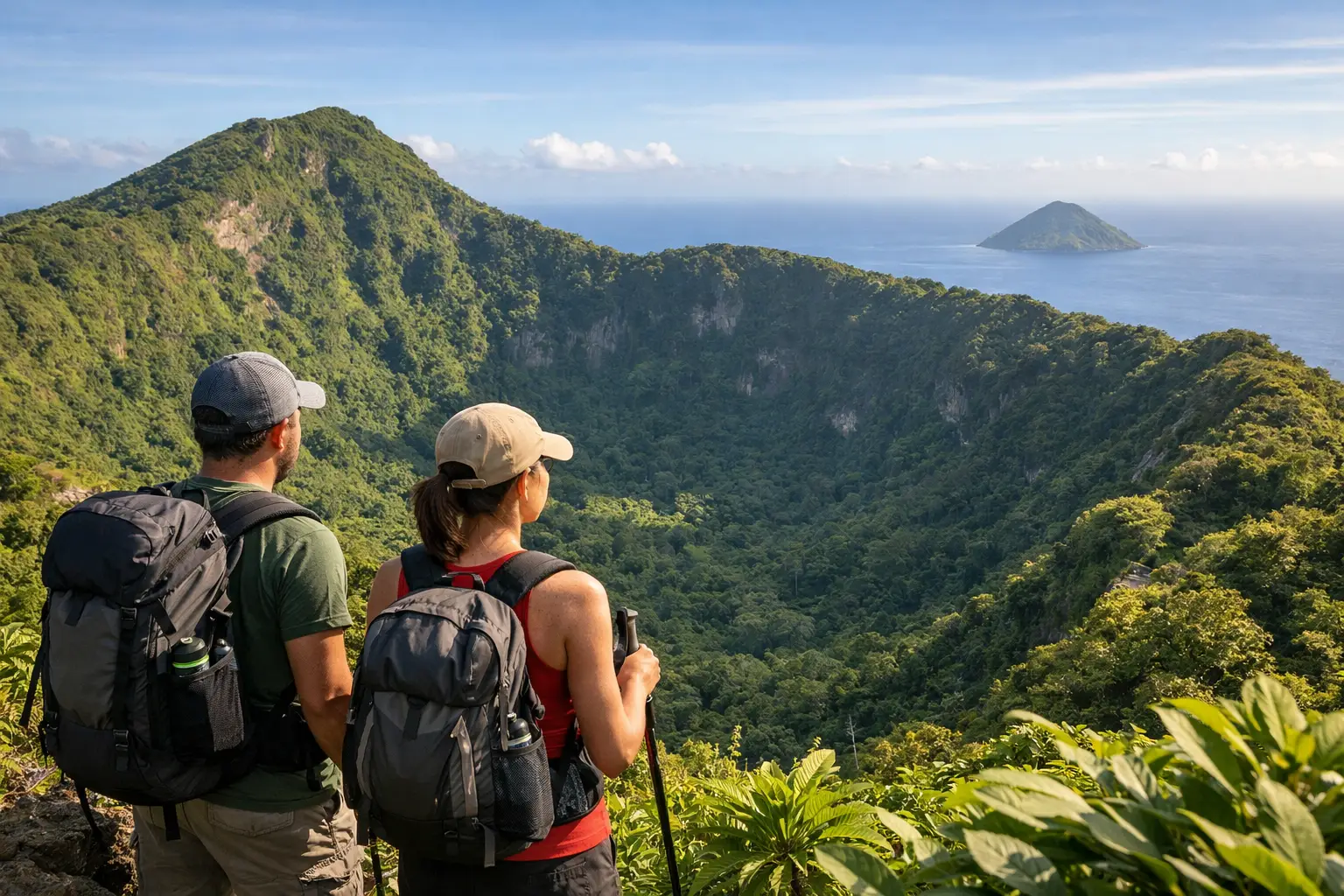
The Quill volcano hike on Statia begins in a landscape that feels unmistakably Caribbean - dry slopes, sea views, and sun-warmed stone - then leads somewhere entirely different. Climb into the crater of this dormant volcano and the island changes character: the air cools, the forest closes in, and ferns, orchids, and enormous trees take the place of cactus and scrub. It is one of Statia’s rare rewards, and it asks you to earn it.
At 1,985 feet above sea level, The Quill is the island’s defining landmark. The hike is not a casual stroll between beach stops, but it is a deeply satisfying half-day for travelers who prefer to discover rather than arrive. With sensible preparation, a guide where required or preferred, and room in your itinerary for the island’s unhurried pace, the crater is an experience that stays with you long after the descent.
What the Quill volcano hike on Statia is really like
The Quill rises over the southeastern half of St. Eustatius, its broad green cone visible from Oranjestad, the harbor, and much of the island’s western coast. From a distance it appears gentle. On the trail, the climb makes its case quickly.
The route begins through lower-elevation dry forest, where sunlight filters through thorny shrubs and small trees. The path gains elevation steadily, becoming steeper and more uneven as it approaches the rim. Roots, loose stones, and damp sections are part of the terrain, particularly after rain. This is a hike for travelers with reasonable fitness, sturdy footing, and no expectation of paved paths or guardrails.
Reaching the crater rim is a moment to pause. On clear days, the view opens across Statia’s coastline and the surrounding Caribbean Sea, with neighboring islands appearing on the horizon. But the rim is not the only destination. For many hikers, the most memorable section is the descent into the crater itself.
Inside, the temperature and vegetation shift dramatically. The crater shelters a humid rainforest fed by trapped moisture and regular rainfall. Tall trees, tangled vines, mosses, and bird calls create an enclosed, almost prehistoric atmosphere. It is a striking contrast on an island that is only about eight square miles - a reminder of just how much ecological variety Statia holds.
How difficult is the Quill hike?
The answer depends on the route, conditions, and your comfort on steep natural trails. Most visitors should consider the Quill a moderately strenuous hike rather than an easy sightseeing walk. Expect a sustained uphill climb, uneven surfaces, and a descent and climb back out if you enter the crater.
A rim walk can suit active travelers who want the volcanic views without committing to the wetter, more demanding crater interior. Going into the crater adds time, mud, and a more significant return climb. If your knees are sensitive on descents, trekking poles can be helpful. If you have little experience hiking in heat or on rough terrain, choose a cooler morning departure and be candid with your guide about your pace.
The weather matters as much as fitness. A bright, dry morning can make the lower slopes hot, while a recent shower can turn the crater path slippery. During wetter periods, conditions can change quickly between the trailhead and the crater floor. There is no prize for rushing this hike. Slow, steady movement is the right rhythm.
Time to allow
Set aside roughly three to four hours for a full crater experience, including time for breaks, photos, and the return. A shorter rim-focused outing may take less time, but schedules vary with trail conditions and group pace. Build in extra time afterward for a long lunch, a swim, or simply a quiet afternoon back at your accommodation. Statia is not an island best measured in tightly packed checklists.
Do you need a guide for The Quill?
Guided hiking is strongly recommended for travelers heading into the crater, even when access rules allow independent hiking. Local guides add far more than navigation. They can read changing trail conditions, identify plants and birds that might otherwise go unnoticed, and place the volcano within the island’s wider natural and cultural story.
Access requirements, trail openings, and guide policies can change, particularly after heavy rain or storm activity. Confirm current conditions directly with local park staff or a qualified local guide before setting out. This is especially important if the crater is central to a short stay on Statia. The island’s limited capacity is part of its character, but it also means advance arrangements are wise.
A private guide is a particularly good choice for couples, photographers, birders, and travelers who enjoy moving at their own pace. A small group outing can be a fine fit for confident hikers looking for a social morning. In either case, let your guide know if you have mobility concerns, heat sensitivity, or a strict flight or ferry connection later in the day.
What to wear and bring
Treat the Quill as a real tropical hike, not a beach excursion. Closed-toe hiking shoes or trail shoes with reliable grip are the best choice. Sneakers may be sufficient in dry conditions for experienced hikers, but they offer less support on wet roots and loose volcanic ground. Avoid sandals.
Wear lightweight clothing you do not mind brushing against vegetation, and bring rain protection even if the morning begins clear. A hat and sunscreen matter on the exposed lower slopes, while insect repellent can be useful in the crater’s humid interior. Carry more water than you think you will need, plus a small snack for the rim or crater break.
Keep your bag light, but do not leave your phone, camera, or a dry pouch behind. The transition from sea-facing slopes to rainforest makes The Quill one of the most photogenic walks in the Dutch Caribbean. Just make sure your attention stays on the trail when footing is uncertain.
When to hike The Quill
Morning is usually the best time for the Quill volcano hike Statia visitors plan around a warm-weather itinerary. Starting early means cooler temperatures on the climb, a better chance of clearer views, and more flexibility if clouds or showers move in later. It also leaves the rest of the day open for snorkeling, diving, a visit to Oranjestad’s historic center, or a slow meal overlooking the sea.
The dry season often brings firmer trails and wider views, but the crater can be rewarding in any season. In wetter months, its greenery feels especially alive. The trade-off is muddier terrain and a higher chance of weather-related changes. Travelers drawn to the rainforest atmosphere may welcome that trade-off; those who want the most straightforward footing should aim for drier conditions.
Avoid treating an arrival day as your only chance to hike. Regional flight and ferry schedules can shift, luggage can arrive late, and the island is worth experiencing without a clock running in the background. Schedule the Quill for a full day after you arrive whenever possible.
Make the hike part of a Statia day
The Quill pairs naturally with the quieter pleasures that give Statia its depth. After the trail, cool off at a beach, wander Lower Town’s historic remains, or settle in for lunch in Oranjestad. Divers may prefer to hike on a non-diving day, particularly if a morning ascent has left their legs tired for entries and exits around the harbor.
If you have more than a few days, do not make The Quill your only walk. The island’s trails reveal dry forest, coastal viewpoints, and a different perspective on its protected landscapes. Still, the volcano is the essential climb. It brings together the contrasts that make Statia feel unlike a resort island: wild, compact, historically layered, and quietly alive.
Leave space for the unexpected on the way down. A change in light across the coast, a bird moving through the trees, or the first salty breeze after the crater’s cool shade can become the part you remember most.
