
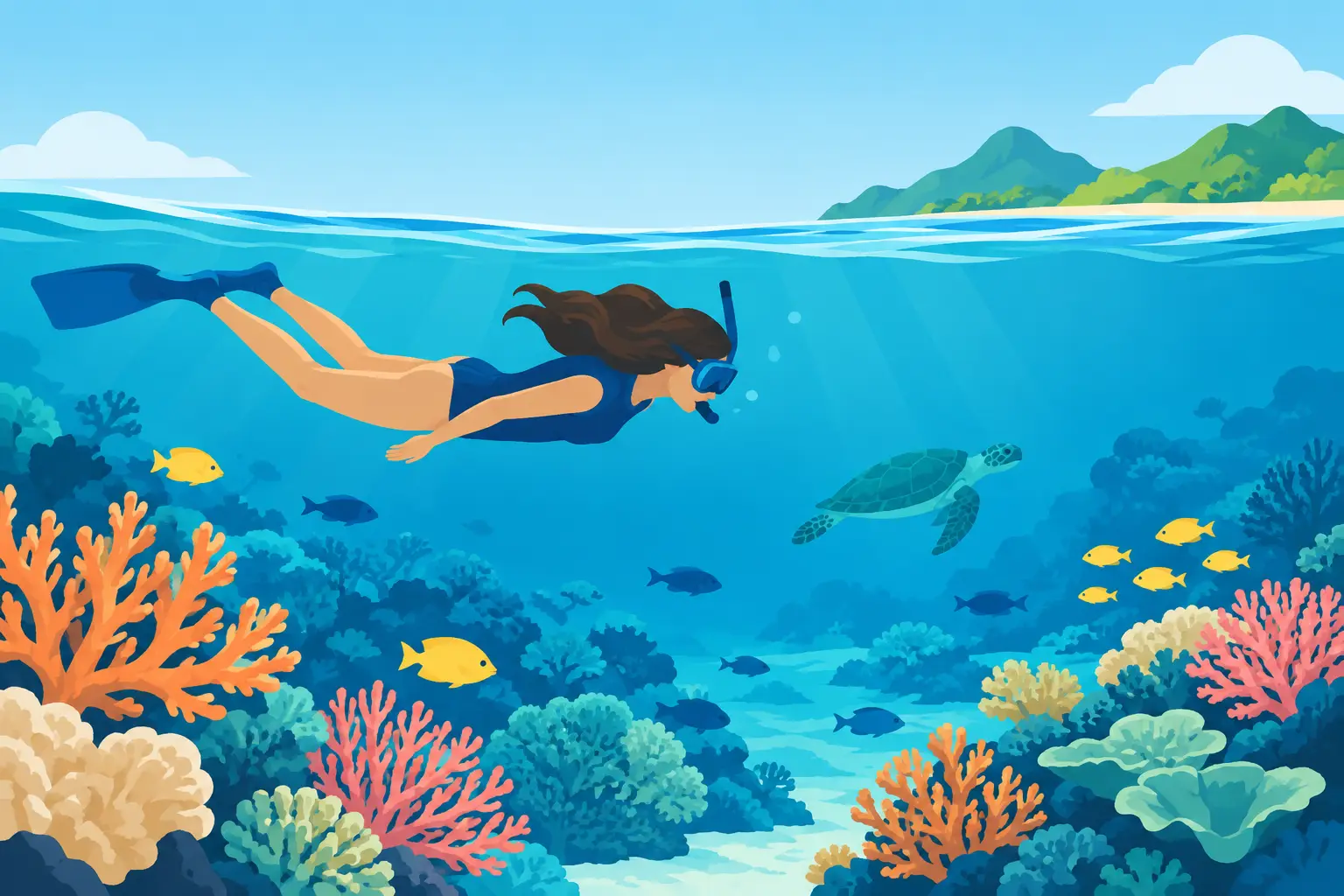
A reef can look indestructible from the surface: a whole underwater city of boulders, branches, shadows, and flashing fish. Up close, it is far more delicate. One misplaced fin, a hand on coral to steady yourself, or an attempt to stand in shallow water can damage animals that may take decades to grow back. Coral safe snorkeling is not about making a perfect trip. It is about moving through the water with enough awareness that the reef is still there, thriving, when the next traveler arrives.
On St. Eustatius, that awareness belongs naturally to the experience. This is an island for travelers who would rather discover than arrive, where protected waters, volcanic contours, and a slower rhythm reward attention. Snorkeling here is not a resort activity to rush between lunch and a lounge chair. It is an invitation to observe a living place on its own terms.
Why coral-safe choices matter
Coral is often mistaken for rock, but it is a colony of tiny animals with a thin living tissue layer. A brush from a fin can scrape that tissue. Repeated contact from swimmers can break fragile forms, stir up sediment, and leave corals more vulnerable to disease and heat stress. Even well-meaning visitors can cause harm when they are concentrating on a turtle, a camera screen, or the next colorful fish.
The good news is that the most effective habits are simple. Keep your distance, control your body position, and accept that the sea sets the pace. A memorable snorkel does not require touching anything. In fact, the less you interfere, the more natural behavior you are likely to see.
Coral-safe practice also extends beyond the coral itself. Seagrass beds, sponges, juvenile fish habitat, and sandy areas filled with small, easily missed creatures all deserve care. Think of the entire shallow-water environment as a neighborhood, not a backdrop.
Coral safe snorkeling starts before you enter
The best protection for a reef is preparation on shore. Choose a mask and snorkel that fit comfortably, then test them in calm shallow water before heading farther out. A leaking mask or loose fin strap is more than an inconvenience: it can lead to sudden grabbing, kicking, and scrambling near the bottom.
Fins are useful for covering distance, but they require room. If the water is shallow enough that your fins might strike coral, slow down, change direction, or wait for deeper water. Short, controlled kicks are generally kinder to the reef than large, forceful strokes. If you are new to snorkeling, practice floating face-down and turning your body without putting your feet below you.
Sun protection deserves a practical, rather than marketing-led, approach. Labels such as “reef safe” are not consistently defined, and no sunscreen is entirely consequence-free once it washes into the sea. Your first layer of protection should be physical: a long-sleeved rash guard, swim leggings, a wide-brimmed hat for the boat or shore, and shade before and after your swim. Use sunscreen on exposed skin, apply it well before getting in the water, and favor products that local operators or marine-protected-area staff recommend.
Avoid bringing disposable bottles, snack wrappers, or loose plastic items to the shore. Wind has a way of carrying small things into the water. Pack drinking water in a reusable bottle and leave the beach cleaner than you found it.
Move like a guest in the water
Once you are over the reef, aim to float horizontally and keep a generous gap between your body and the bottom. A few feet of space is better than a few inches, especially in surge. Coral may look farther away than it is when you are wearing a mask, and a passing wave can close that distance quickly.
Do not stand, touch, or chase
If you need to clear your mask, adjust a fin, or catch your breath, move to genuinely open water or return to shore. Do not stand on coral, and do not assume a pale patch is safe simply because it looks sandy. It may hold young coral, seagrass, sea urchins, or camouflaged marine life.
Hands-off snorkeling is equally important for wildlife. Never feed fish, hold a starfish, lift a shell, or touch a turtle. Feeding changes natural behavior and can make animals dependent on people. Touching can remove protective coatings, stress the animal, or provoke a defensive response. A turtle swimming away from you is not a failed encounter. It is a reminder that you are visiting its home.
Keep your camera at a respectful distance, too. If an animal changes direction, hides, speeds up, or repeatedly looks toward you, give it more space. The strongest photographs often come from waiting quietly, not following closely.
Let buoyancy, not effort, guide you
Snorkeling is easier and safer when you are relaxed. Hold your arms close, breathe slowly through the snorkel, and use small movements to steer. If you feel tired or uneasy, turn back early. There is no prize for pushing through choppy water, and fatigue is when accidental contact becomes more likely.
For less confident swimmers, a guided outing or flotation aid can make a real difference. A properly used snorkel vest helps you remain comfortably at the surface without cycling your legs toward the reef. It is not a substitute for judgment, but it can reduce the instinct to stand or grab for balance.
Read St. Eustatius before you swim
Statia's marine environment is protected, but it is still open sea. Conditions can change with wind, swell, current, and recent weather. A beach that looks inviting from shore may have surge along the rocks or reduced visibility below the surface. On a small volcanic island, entry points can also be uneven, and water depth may change quickly.
Check local conditions on the day of your snorkel and listen carefully to the advice of marine park staff, dive operators, and guides. If they suggest another location, a different time, or no water entry at all, take that guidance seriously. Choosing not to snorkel on a rough day is not missing out. It is part of traveling well in a place where nature, rather than a fixed itinerary, remains in charge.
Use designated access points where available, and respect mooring systems and marked protected areas. Anchors can destroy coral in moments, which is why responsible boats use moorings instead of dropping anchor on the reef. If you join a boat trip, ask how the operator manages waste, wildlife encounters, and changing sea conditions. The answer tells you a great deal about the experience you are booking.
Choose local knowledge over guesswork
An experienced local guide does more than point out fish. They can identify safe entry conditions, explain the marine park's rules, help you recognize reef life, and keep a group from crowding sensitive areas. For independent travelers, that knowledge can turn a good swim into a more meaningful one.
This is especially valuable if you have limited snorkeling experience, are traveling with a partner of a different comfort level, or hope to see particular wildlife without disturbing it. Small island operations may have limited space and schedules that shift with weather, so confirm plans directly and reserve ahead when possible.
A responsible operator will not promise wildlife on command or push guests into unsuitable conditions. They will make room for the quiet parts of the experience: the sound of your own breathing, the slow work of a parrotfish, the moment a reef pattern begins to reveal itself as dozens of separate lives.
Carry the care beyond the shoreline
After your swim, rinse gear away from the sea when facilities allow, collect every item you brought, and resist taking shells, coral fragments, or other natural souvenirs. A broken piece of coral is still habitat. Its value is in the water, not on a shelf at home.
You can also support the kind of travel that keeps places like St. Eustatius distinctive: choose locally rooted operators, follow protected-area rules, and share what you learned with the people traveling after you. Conservation is not only a donation box or a rule sign. It is the accumulated effect of thousands of small decisions.
The rare reward of a thoughtful snorkel is not simply what you see below the surface. It is leaving the water knowing that your visit asked little of the reef and gave you a clearer sense of why it deserves protection.
