
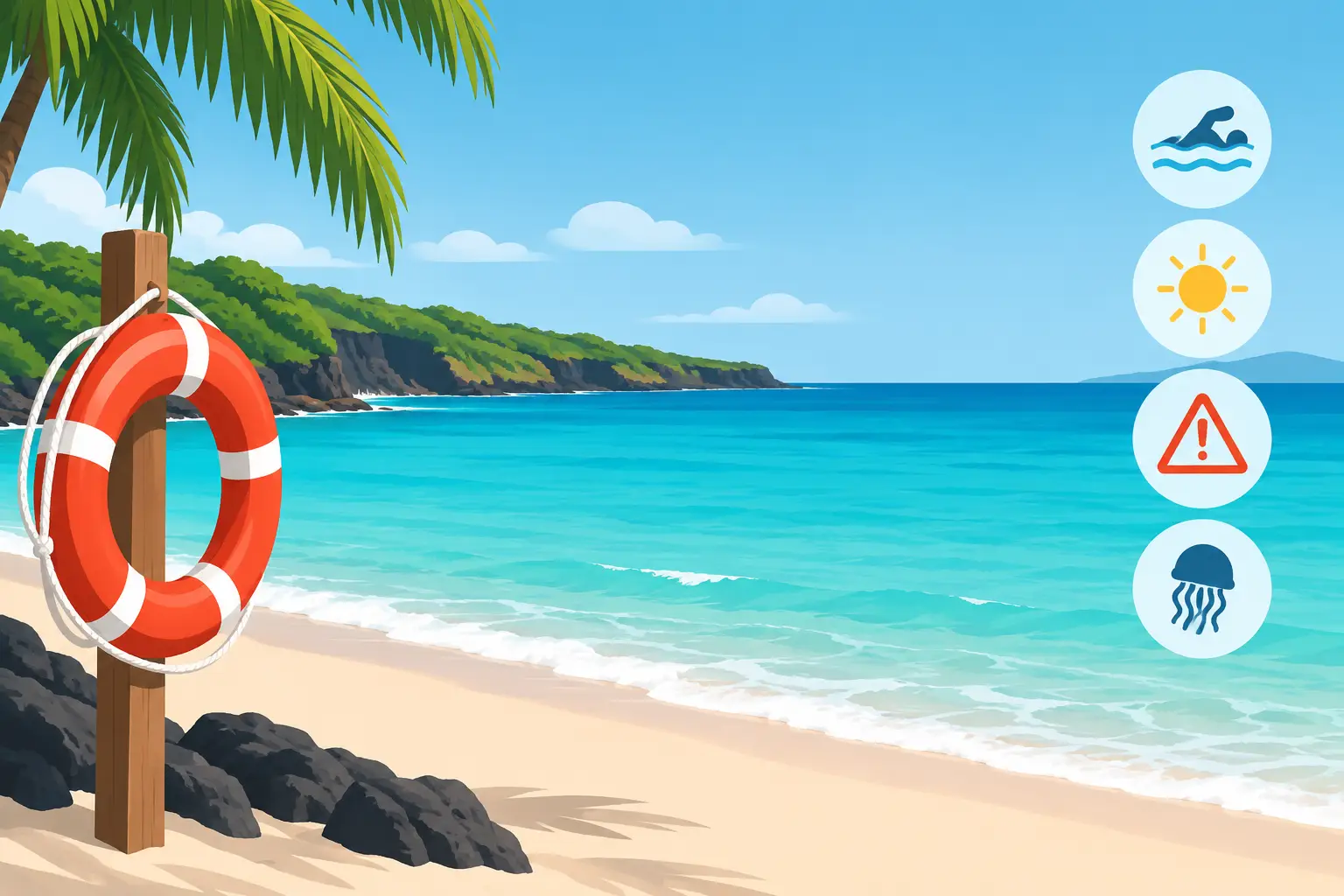
The first thing to know about Statia beach safety is that this is not a Caribbean island of endlessly groomed, resort-backed swimming beaches. Its coast is wilder, more volcanic, and more rewarding for travelers who read the water before stepping into it. A quiet black-sand cove, a blue horizon, and the green slope of The Quill can make a swim feel like a rare reward. Conditions, however, can change quickly.
On St. Eustatius, the best beach day is rarely about claiming a lounge chair. It is about choosing the right shore for that day’s wind and swell, keeping an eye on the sea, and treating the marine environment with the respect it deserves.
Statia Beach Safety Starts With the Coastline
Statia’s beaches differ sharply from one side of the island to the other. The Caribbean, or leeward, coast tends to offer the calmer water most visitors picture when they plan a swim or snorkel. The Atlantic-facing coast is more exposed. It can be beautiful for a walk, photographs, and feeling the force of the island’s landscape, but it is often a poor choice for swimming.
Zeelandia Beach on the east coast is the clearest example. Its dark volcanic sand and dramatic setting make it one of Statia’s memorable shorelines, particularly when waves roll in beneath the cliffs. Those same waves, along with strong currents and occasional rough surf, mean visitors should not assume it is safe to enter the water. If the sea looks energetic from shore, it is not a day to test it.
On the leeward side, areas around Oranje Bay and nearby small beaches can be gentler, especially when trade winds and swell are low. “Can be” is the operative phrase. A sheltered location is not a guarantee, and the sea is not on a fixed schedule. Ask a local host, dive operator, or other experienced island professional where conditions are most favorable that day.
Read the Water Before You Commit
Statia has a refreshingly unprogrammed pace, but the ocean requires active attention. There may not be a lifeguard on duty or formal warning signage at every beach, so visitors need to make the first safety call themselves.
Stand back for a few minutes before entering. Look for a consistent break in the waves, foam moving steadily away from shore, or water that appears darker and less turbulent than the surrounding sea. These can be signs of a current moving offshore. If you are uncertain, stay out. A swim can wait; the view still belongs to you.
Wind deserves the same respect. A beach that was calm at breakfast can feel very different by midafternoon. Larger swells can also arrive from distant weather systems, even when Statia itself is sunny. Check the conditions again each time you return to the water rather than relying on yesterday’s experience.
If you are caught in a current, do not fight directly against it. Signal for help, stay as calm as possible, float to conserve energy, and swim parallel to shore when you can move safely out of the pull. This is useful knowledge anywhere, but avoiding questionable water in the first place is the wiser choice, particularly on an uncrowded shore.
Volcanic Sand, Rock, and Reef Need Different Footing
Statia’s shoreline is part of its character. Black and dark-gray sand, coral fragments, rock shelves, and uneven entry points are far more common than broad, soft, manicured beaches. Bare feet may be perfectly comfortable in one spot and vulnerable a few yards away.
Water shoes are a practical addition to a Statia packing list. They help on hot volcanic sand, slippery stones, and sharp fragments near the tide line. Move carefully when entering or leaving the water, especially if a small wave can shift your footing. Avoid climbing wet rocks for a better photograph. The rock may look stable, but algae and spray can make it slick with little warning.
It is also best not to place hands or feet on coral, even in shallow water. Coral is a living animal, easily damaged by contact, and its rough surface can leave an unpleasant cut. Give reef and rocky edges room rather than trying to squeeze through a narrow opening.
Keep Cuts Small and Treat Them Promptly
Minor scrapes happen more easily around a volcanic coast. Bring a small waterproof first-aid kit with antiseptic, bandages, and clean water for rinsing. Clean a cut promptly, cover it, and avoid returning to the sea with an open wound. If a wound is deep, painful, shows signs of infection, or results from an animal sting or puncture, seek local medical advice.
Snorkeling Is Best Planned, Not Improvised
The waters around Statia are protected for good reason. Reefs, fish life, and historic shipwrecks are central to the island’s appeal, but the most compelling underwater sites are often better reached by boat than by swimming from a beach.
For visitors without strong open-water skills, a guided snorkel or a trip arranged through a local dive operator is the most sensible route. Local professionals know which sites are suitable for the day, how wind has affected visibility, and where boat traffic or current may be a concern. They also provide a more meaningful introduction to the marine park than a hurried shore entry ever could.
Never snorkel alone. Use a brightly colored float or flag where appropriate, keep your partner in sight, and agree on a turnaround point before you enter. If visibility drops, waves build, or you feel tired sooner than expected, turn back early. The best snorkeling memories are not made by pushing a distance.
Choose reef-safe sun protection and favor shade, rash guards, and hats where possible. More importantly, do not touch, feed, chase, or collect marine life. The underwater world around Statia is not a backdrop for a souvenir. Its health is part of what makes the island feel so distinct.
Weather, Light, and Heat Change the Equation
Caribbean sun can make a moderate swim feel effortless until dehydration catches up. Bring drinking water to the beach, take breaks in shade, and be especially cautious after a hike on The Quill or a morning spent exploring Oranjestad’s historic lower town. Heat fatigue, alcohol, and open water are an unhelpful combination.
Afternoon showers and distant thunderstorms can develop quickly. Leave the water at the first sign of lightning or thunder, even if the storm seems far away. Heavy rain can also change footing on steep paths and make driving conditions less predictable on the way back from a remote beach.
Avoid swimming alone close to sunset. Light fades quickly, judging depth becomes harder, and help is less likely to be nearby. Statia’s evenings are better reserved for a slow meal, a sea view, or watching the island settle into its quieter rhythm.
A Simple Beach Routine for Independent Travelers
A little preparation preserves the freedom that brings many travelers to Statia in the first place. Before setting out, tell someone where you are going if you plan to visit a quieter stretch of coast. Bring water, sun protection, footwear, a charged phone in a waterproof pouch, and more than you think you will need for the return walk or drive.
At the beach, assess the water before unpacking. If waves are rough, currents are unclear, or the shoreline has no other swimmers who appear comfortable with the conditions, make it a land-based visit. Walk the sand, take photographs, and save your swim for a calmer leeward spot or a professionally guided outing.
Families should keep children within arm’s reach in any moving water. Strong swimmers should remember that ability in a pool does not automatically translate to confidence in surf, current, or uneven coastal entries. On a small island, good judgment is the most useful piece of gear you bring.
Let the Sea Set the Pace
Statia is for travelers who would rather discover than arrive. That spirit works beautifully at the beach when it is paired with patience. Some days offer clear, calm water and an easy float beneath the Caribbean sun. Other days ask you to admire the coastline from dry sand and let the Atlantic keep its distance.
Either choice can be part of the island, as it feels. Let local knowledge and the conditions in front of you shape the day, and the coast will reveal itself on its own terms.
