
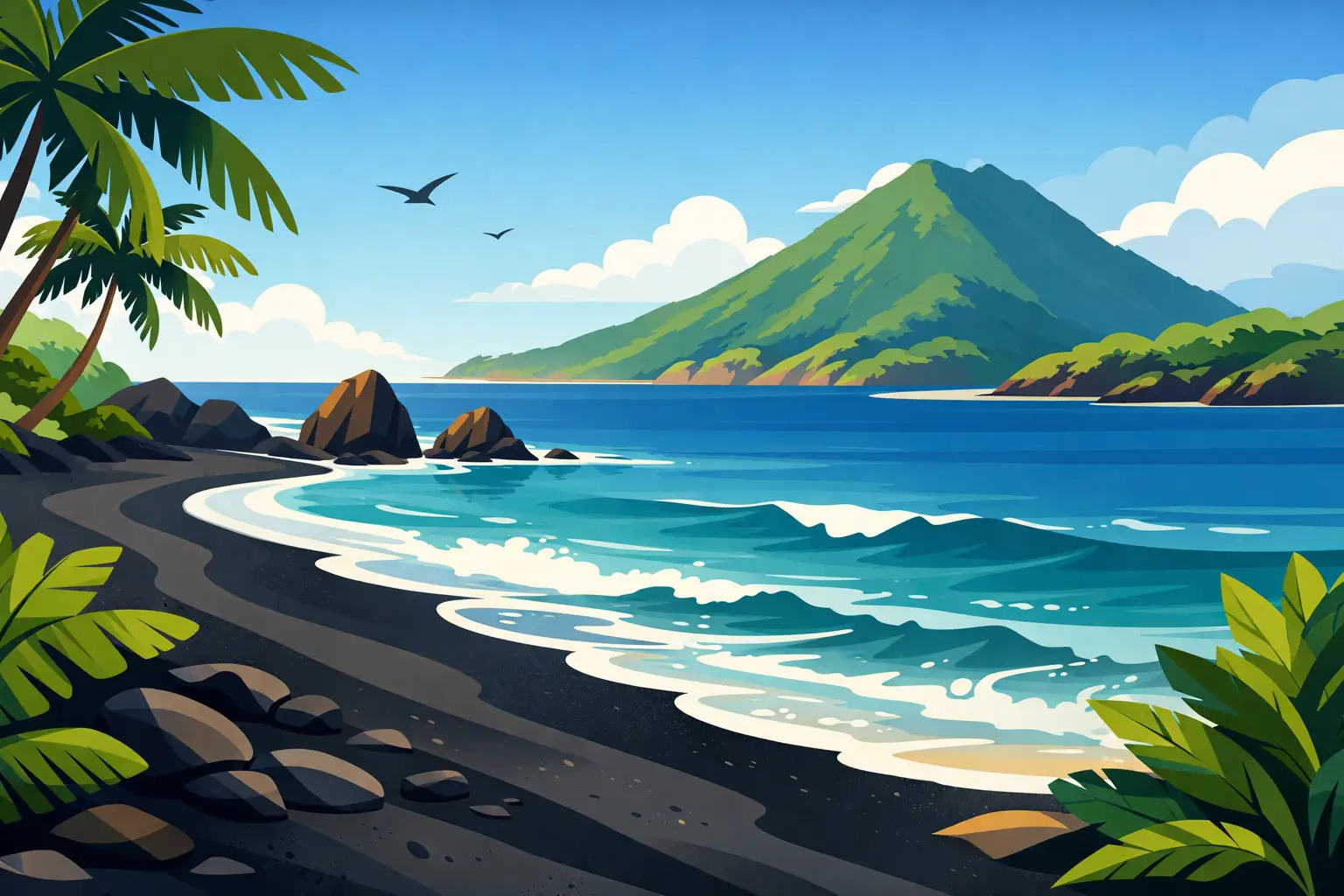
At Zeelandia Beach, the black sand beach Statia travelers come to photograph is not arranged for a day of loungers, cocktails, and easy swimming. It is a broad, dark sweep beneath green volcanic slopes, open to the Atlantic and often almost entirely empty. Stand here for a few minutes and St. Eustatius feels less like a Caribbean vacation product and more like what it is: a volcanic island with a big story.
For travelers who would rather discover than arrive, this is one of Statia’s rare rewards. The beach asks for a little intention - a rental vehicle, sensible timing, and respect for a powerful sea - then gives back a landscape that feels remarkably unedited.
Black Sand Beach Statia: The Volcanic Side of the Island
Zeelandia Beach lies on Statia’s eastern coast, away from the calmer waters and historic waterfront of Oranjestad. Its color comes from the island’s volcanic geology. Fine, dark grains collect along the shore below steep cliffs, while the ocean shifts from deep blue to white with the changing surf. On a bright morning, the contrast can be startling: black sand, green hillsides, blue sky, and no resort development in sight.
This is not the soft, pale-sand Caribbean image many visitors expect. That is precisely its appeal. Zeelandia has a raw, spacious quality that makes it especially memorable for photographers, nature-minded travelers, and anyone who wants to see Statia beyond its harbor, dive sites, and colonial streets.
The experience changes with the weather. Trade winds can bring lively waves and salt spray, giving the beach a dramatic, windswept character. On calmer days, it is a peaceful place to walk slowly along the shoreline and watch the light move across the water. Neither version is better. It depends on whether you are hoping for moody coastal scenery or a quieter pause between island adventures.
Do Not Treat Zeelandia Like a Resort Beach
The same open Atlantic exposure that makes Zeelandia beautiful also deserves caution. Surf and currents can be strong, and conditions are not reliably suited to swimming. There are no beach clubs, regular lifeguards, or the kind of facilities that turn a shore visit into an all-afternoon outing. Think of it as a nature stop first, not a conventional swimming beach.
That distinction helps you plan well. Visit for the view, a shoreline walk, photographs, or a moment of stillness after exploring the island. If you do enter the water, assess the conditions closely and do not assume that a calm-looking surface means a safe swim. When in doubt, stay on shore. Statia’s underwater world is extraordinary, but its best marine experiences are generally enjoyed through local dive and snorkeling operators who know the conditions.
The beach can also be important habitat for nesting sea turtles. Give wildlife a generous distance, avoid disturbing tracks or nests, and leave the shoreline exactly as you found it. A small island’s natural spaces remain special because visitors help keep them that way.
How to Visit Zeelandia Beach
A car is the most practical way to reach the east coast, particularly if you are carrying water, a camera, or walking shoes. Statia is compact, but its roads, hills, and heat can make distances feel longer than they appear on a map. A taxi may work if arranged in advance, though return transport should be confirmed before you go. Island schedules and availability can change, especially outside busier travel periods.
Plan a short visit rather than arriving unprepared for a full beach day. Bring drinking water, sun protection, and footwear that is comfortable on uneven ground and hot sand. There is little natural shade along the beach, so early morning and late afternoon are often the most comfortable times to go. Those hours also offer the gentlest light for photography.
Wind can be part of the experience. A light layer to protect against sun and blowing sand is useful, while a waterproof pouch can make a difference for phones and cameras near the surf. Pack out every item you bring. Zeelandia’s power comes from how untouched it feels.
Pair It With a Day Beyond the Shore
Zeelandia works best as one chapter of a wider Statia day. Begin in Oranjestad, where the upper and lower town reveal traces of the island’s trading past, then head east for a change of pace and perspective. The transition is quick but meaningful: historic stonework and harbor views give way to open sea, cliffs, and volcanic terrain.
Travelers with hiking plans may find that a coastal stop provides a welcome contrast to the forested slopes of The Quill. Others may prefer to visit after a morning dive, when the beach offers a chance to see the island’s volcanic character above water. If your itinerary is relaxed, leave room simply to sit and watch the horizon. On Statia, unplanned time is often where the island, as it feels, comes through most clearly.
What to Photograph and Notice
The obvious photograph is the meeting of black sand and Atlantic water, but Zeelandia rewards a closer look. Notice how the sand changes texture near the tide line, where small stones and shells catch in the darker grains. Look back toward the hills to understand the scale of the coast. The beach is not isolated from the island’s volcanic form - it is an expression of it.
The emptiness is worth noticing too. In more developed Caribbean destinations, a view like this might be framed by umbrellas, music, and busy beachfront terraces. Here, the soundscape is often wind, waves, and seabirds. That quiet is not a lack of things to do. It is a different kind of luxury, especially for couples and independent travelers who have chosen Statia for room to breathe.
Photographers should be patient with the changing light rather than expecting a single postcard-perfect scene. Strong midday sun emphasizes the sand’s deep tone and the sea’s intensity. Late-day light can soften the cliffs and bring warmer color into the landscape. If the sky turns overcast, Zeelandia can become even more atmospheric - dramatic rather than disappointing.
A Few Practical Expectations
Zeelandia is for travelers comfortable with a lightly structured experience. There may be no one there to tell you where to stand, when to leave, or what conditions will be like an hour later. That freedom is part of its character, but it comes with responsibility. Check local weather before setting out, let someone know your plans if you are heading off on your own, and turn back if roads or sea conditions feel unsuitable.
It is also worth managing expectations around amenities. Bring what you need, do not count on purchasing food or drinks nearby, and save a meal for one of the island’s local restaurants afterward. Advance reservations can be wise for dinner, particularly when your visit overlaps with a small island event or a busy weekend.
For visitors traveling without a car, Zeelandia may require more planning than other sights. That does not make it off-limits. It simply means arranging transportation with a local provider and allowing enough time for a return pickup. The extra coordination is usually repaid by the feeling of having reached a coast that remains outside the usual Caribbean routine.
Let the Beach Set the Pace
There is no need to force Zeelandia Beach into a packed itinerary. Give it an hour, or give it an unhurried afternoon if the weather is kind and you are prepared. Walk, look, listen, and resist the urge to make every moment productive.
A black-sand shore on a small Dutch Caribbean island is already a reason to slow down. Let it be the place where Statia’s volcanic past, Atlantic edge, and enduring quiet become more than details on a travel plan.