
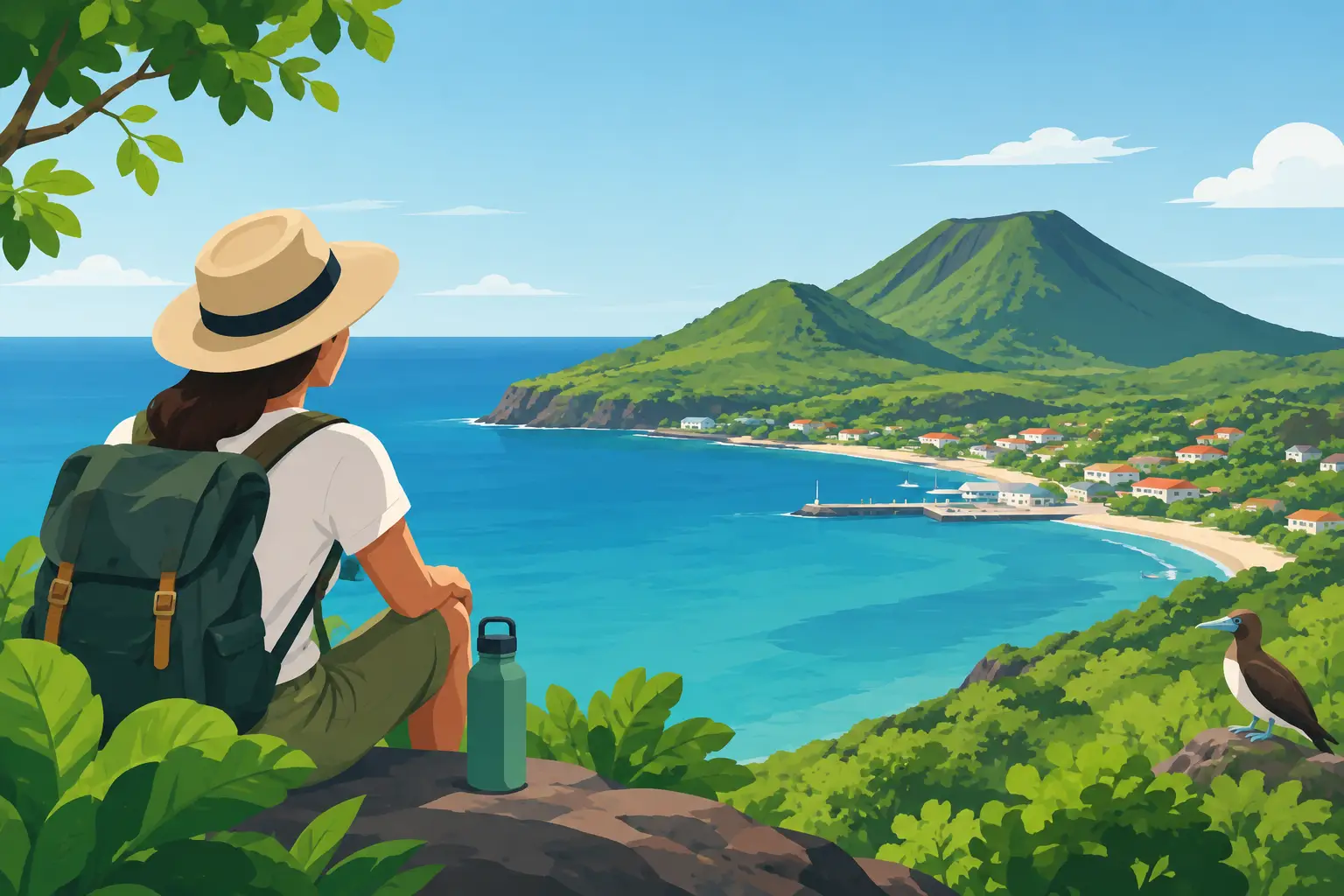
Statia does not ask much of its visitors, but it does reward attention. A reef can be reached in minutes, a volcanic trail begins close to town, and conversations often outlast the plan you made for the afternoon. Knowing how to travel responsibly in Statia means allowing that intimacy to shape your choices - from the boat you board to the way you move through a village, trail, or underwater world.
This is not an island built for high-volume tourism. Its appeal is precisely that it feels lived in: a small Caribbean community with a deep harbor, layered history, protected nature, and an unhurried pace. Responsible travel here is less about performing perfection and more about leaving room for local life while helping safeguard the things that make Statia a rare reward.
Arrive prepared, then travel at island pace
A thoughtful trip starts before you land. Flights, ferries, rental vehicles, guides, dive boats, and smaller accommodations can have limited capacity, and schedules may shift with weather or operational needs. Reserve key elements in advance, particularly during busy travel periods, but leave enough flexibility in your itinerary to accept a change without treating it as a failure of service.
That flexibility is part of traveling well in a small place. Confirm departure times directly, arrive early, and build a buffer around connections rather than assuming every journey will run like a major airport transfer. If a dive day is moved for sea conditions or a hike is rescheduled after rain, the decision is usually rooted in safety and care for the environment.
Packing with the island in mind also reduces pressure on limited local supplies. Bring a refillable water bottle, reef-conscious sun protection, a dry bag for boat days, sturdy closed-toe shoes for hiking, and any personal essentials you rely on. Use reusable items where practical, but do not overcomplicate the trip with gear you will not use. The most sustainable item is often the one you already own and will keep using.
How to travel responsibly in Statia's natural spaces
Statia's natural landscape is close at hand, which makes good habits especially consequential. The Quill's forested slopes and crater, the rugged northern hills, and the surrounding marine environment are not backdrops for a quick photograph. They are living habitats, managed landscapes, and places with rules designed to protect them.
Take the trail seriously
Stay on marked paths, even when a viewpoint or shortcut looks tempting. Erosion on steep volcanic ground can happen quickly, and a few off-trail footsteps can damage plants or widen fragile routes. Wear suitable footwear, carry sufficient water, and choose a guided outing when one is required or when local knowledge will make the experience safer and richer.
A local guide can point out species and stories that are easy to miss on your own, while helping you understand changing trail conditions. This is one of the best trade-offs a visitor can make: spend a little more time and money locally, and receive a far deeper experience than a rushed independent walk provides.
Do not remove shells, plants, stones, or historical fragments as souvenirs. A small object can seem insignificant in a suitcase, but when many visitors make the same choice, a place slowly loses the details that make it itself. Take photographs, make notes, and leave the landscape whole for the next person.
Treat the sea as a protected neighborhood
Divers and snorkelers come to Statia for clear water, volcanic formations, wrecks, and abundant marine life. The privilege comes with simple responsibilities: choose operators who follow marine-park guidance, listen carefully to briefings, and never touch coral, turtles, fish, or wreck structures.
Good buoyancy is not merely a technical skill. It is reef protection. If you are new to diving, rusty in the water, or uncertain around currents, say so before the trip. A responsible operator would rather adjust the plan than have someone struggling near a reef.
For snorkeling, avoid standing on coral or seagrass, even in shallow water. Keep a respectful distance from wildlife and skip any experience that encourages feeding, chasing, or crowding animals for a photo. Reefs recover slowly. Your best encounter is the one that leaves no visible trace.
Spend in ways that keep value on the island
Responsible travel is also economic. On Statia, choosing a locally owned guesthouse, restaurant, guide, taxi, dive operator, or small shop helps circulate visitor spending through the community rather than treating the island as a stopover.
There is no need to turn every purchase into a moral calculation. Simply make room for local choices. Ask where a dish is prepared locally, book an island guide for a day you might otherwise spend wandering without context, and choose accommodations where hosts can share practical advice about their neighborhood. The result is often more personal than a standardized resort experience anyway.
Be mindful of the way you discuss price. Small businesses face the realities of importing goods, maintaining equipment, and operating with limited scale. Bargaining may feel routine in some destinations, but pressing for a discount on a modestly priced service can undermine the very local economy you came to support. If something is beyond your budget, choose another option graciously.
Tipping customs and service charges can vary by business, so ask politely if you are unsure. Courtesy matters more than a rehearsed rule. Pay agreed rates promptly, respect cancellation policies, and communicate early if your plans change.
Respect Statia as home, not a stage set
The best local encounters are reciprocal. Greet people, be patient when service is paced differently from home, and ask before photographing anyone, especially children, workers, or private residences. A colorful porch, a fishing boat, or a quiet street may feel picturesque to a visitor, but it belongs to somebody's daily life.
This consideration extends to heritage sites. Statia's history includes commerce, colonial power, enslavement, resistance, and migration. Approach historic places with curiosity rather than consumption. Read the interpretive material, listen when local people offer context, and resist reducing complex history to a quick caption.
Language can be part of that respect. English is widely spoken, and you may also hear Dutch and other Caribbean languages and accents. You do not need to arrive fluent in anything beyond your own language, but a warm greeting, a thank-you, and genuine attention go a long way.
Noise is another easy place to be considerate. Keep music low near accommodations and public spaces, especially at night. Avoid assuming that every beach, roadside pull-off, or waterfront area is a party zone. Statia's quiet is not empty space waiting to be filled. It is part of the island, as it feels.
Use less, waste less, and ask when unsure
On a small island, water, energy, and waste systems are felt locally. Take shorter showers, switch off air conditioning when you leave the room, and reuse towels when it makes sense. These gestures will not transform a trip on their own, but they are practical signs of respect for the resources that support residents year-round.
Refuse single-use items when an alternative is easy, carry out any trash from trails and beaches, and sort waste according to the guidance at your accommodation. Do not assume every material can be recycled locally. When in doubt, ask your host or operator what is actually useful to separate.
The same principle applies to transport. Walking can be a lovely way to experience Oranjestad and its historic contours, but heat, hills, road conditions, and distance matter. Use a taxi or rental vehicle when needed, combine errands or outings where possible, and drive slowly. The responsible choice is not always walking farther. It is choosing the safest, most considerate option for the day.
Let your itinerary have breathing room
A packed schedule can make even a low-impact traveler feel extractive: arriving, consuming, documenting, and moving on before a place has had a chance to register. On Statia, leave an afternoon open. Return to a restaurant you enjoyed. Sit with a view after a hike instead of racing to the next activity. Give weather and conversation permission to alter the plan.
That slower rhythm is not a compromise. It is how the island becomes more than a destination checked off between larger Caribbean stops. Travel responsibly, and you may leave with less clutter, fewer rushed photos, and a much clearer sense of the people and places that made the journey worth taking.
