
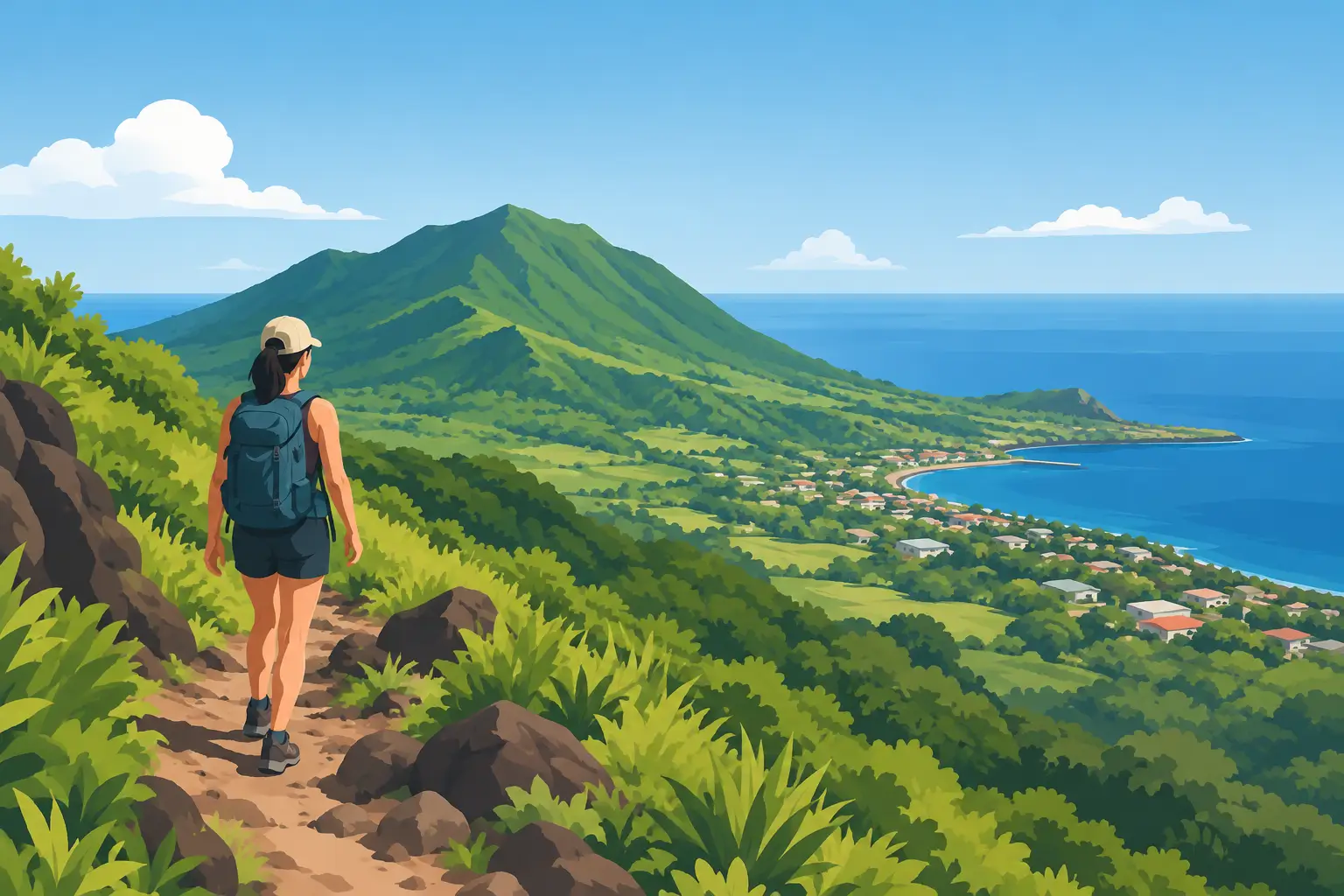
The north of St. Eustatius feels like the island has stepped back from the road and left the landscape in charge. Dry forest, thorny scrub, open slopes, and sea views unfold with few signs of development. If you are wondering how to explore Boven trails, begin with the right expectation: this is not a manicured park walk. It is a rewarding outing for travelers who are comfortable with uneven ground, heat, changing weather, and a little self-reliance.
Boven National Park covers much of the island's northern end, a quieter counterpoint to the volcanic drama of The Quill in the south. Its trails lead through an older, wilder Statia, where hills rise above the Atlantic and Caribbean Sea, birds move through the brush, and the coast can look beautifully untouched. For travelers who would rather discover than arrive, it is a rare reward.
Choose Your Boven Trail Experience
Boven is best approached as a landscape rather than a single trail. Routes and conditions can vary with rainfall, vegetation growth, maintenance work, and the season. Some walks are relatively accessible for fit, independent hikers with good preparation; others are more satisfying, and sometimes more sensible, with a local guide who knows the terrain and can read the day.
A short coastal or lower-elevation walk is a good introduction if you have arrived recently, are testing your comfort in the heat, or want to pair hiking with another plan. These routes offer broad views and a strong sense of remoteness without committing your whole day. Longer hikes toward the northern hills ask more of your legs and your navigation. They can include loose stone, steep sections, exposed ridges, and stretches where the trail is less obvious than visitors expect.
The right choice depends on more than distance. A route that feels straightforward in cool, dry conditions can become demanding under a bright midday sun or after a shower has made rocks slick. Be honest about your fitness, footwear, and confidence on unpaved terrain. There is no prize for choosing the longest route when a shorter walk gives you time to notice the island.
Go with a local guide when the route calls for it
For first-time visitors, a guide adds far more than direction. Local guides can point out medicinal plants, birdlife, historic traces, and the subtle changes between habitats that might otherwise pass unnoticed. They also know which routes are currently practical and which should wait for another day.
Guided hiking is particularly worthwhile if you want to reach a more remote area, are traveling alone, or have limited time on St. Eustatius. Availability can be limited, especially during busy travel periods, so arrange walks in advance rather than assuming a same-day departure will be possible. Confirm the meeting place, duration, required gear, and whether transport is included.
Plan Around Heat, Wind, and Rain
The Boven landscape is open in places, and shade is not something to count on. Start early, ideally soon after daylight, when the air is cooler and the island's birdlife is more active. Morning also gives you room to adjust if the walk takes longer than planned.
Carry more water than you think you will need. A reusable bottle is essential, and an additional bottle is wise for longer or exposed routes. Wear a hat, sunscreen, breathable clothing, and closed shoes with real grip. Sandals may be perfect for a beach afternoon, but they are a poor match for loose rock, spiny vegetation, and uneven trails.
Weather deserves a little respect here. Wind can be strong on ridges and along the northern coast, while rain can change footing quickly. Check current conditions before you set out, and do not treat an old route description as a guarantee. If clouds build, visibility drops, or a guide advises against a planned hike, choose another part of the island for the day. St. Eustatius rewards flexibility.
How to Explore Boven Trails Responsibly
The appeal of Boven lies partly in how little it has been altered for visitors. That makes careful hiking part of the experience. Stay on established paths where they are visible, avoid cutting switchbacks, and do not move stones or pick plants for souvenirs. The dry vegetation can appear hardy, yet it is easily damaged by repeated shortcuts.
Bring out everything you bring in, including food wrappers and fruit peels. Keep noise low. You may see goats and other signs of island life, but this is also habitat for resident and migratory birds, reptiles, insects, and native plants adapted to a demanding climate. A quiet pace gives you a better chance of seeing them and leaves the place as it feels for the next walker.
Cell service should not be your safety plan. Tell someone where you are going and when you expect to return, particularly if hiking independently. Download or save any directions you need before leaving your accommodation, keep your phone charged, and carry a small first-aid kit. If you are unsure whether a route is open, marked, or appropriate for your group, ask locally before departing.
Pace the day, not just the trail
Boven is often more memorable when it is not rushed. Allow time to stop at a high point, watch the changing color of the sea, and notice how quickly the breeze shifts on the hills. The views can stretch toward neighboring islands on a clear day, but the smaller details matter too: cactus flowers, limestone textures, the sound of wind in dry grass.
This is also why an ambitious hiking schedule is not always the best one. Pairing a demanding northern hike with a long afternoon of driving, snorkeling, or diving can leave you tired rather than fulfilled. If Boven is your main activity, let it be the center of the day. Plan a leisurely meal afterward, return to your hotel to rest, or make room for a quiet walk through Oranjestad later in the afternoon.
Build a Practical Boven Hiking Kit
You do not need expedition equipment, but a few essentials make a meaningful difference. For a typical hike, bring water, sun protection, sturdy closed-toe shoes, a lightweight rain layer, snacks, a fully charged phone, and any personal medication. A small backpack keeps your hands free on steeper ground.
Consider long, lightweight pants if you are sensitive to scratches from brush. Insect repellent can be useful depending on the season and time of day. If you hike with a camera, keep it protected from dust and sudden rain. Most importantly, avoid carrying so much that you lose balance or overheat.
Transportation should be arranged with equal care. Public options on a small island may not match a hiker's preferred start and finish times, and trailheads are not always places where you can expect to find a ride waiting. A rental vehicle, pre-arranged taxi, or guided excursion can solve the logistics. Confirm your return plan before you begin walking, especially if your hike ends away from where it started.
Make Space for What You Find
Boven is not a checklist destination. Its pleasures are less about collecting named viewpoints than feeling the island grow quieter beneath your feet. One day may bring far-reaching blue horizons; another may bring low cloud, wind, and a landscape that feels almost elemental. Both belong to the experience.
Walk with enough preparation to feel free once you are there. Start early, choose a route that suits the day, and let a local guide lead when knowledge of the terrain will deepen the journey. In Boven, the best souvenir is often a slower rhythm - and the feeling of having met St. Eustatius on its own terms.
