
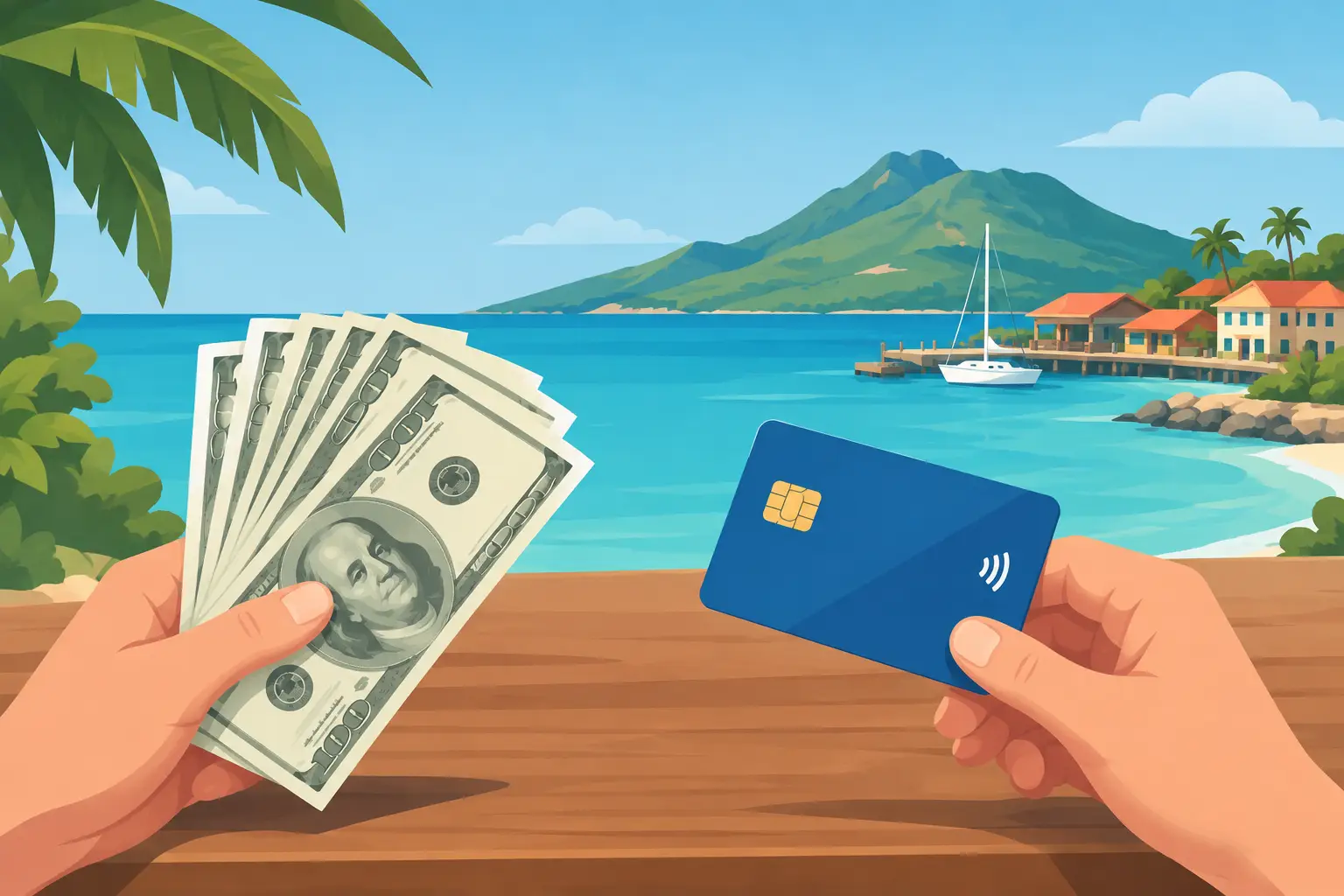
The practical surprise for many first-time visitors is that Statia US currency is simply the US dollar. On an island that feels distinctly Dutch Caribbean - with its old stone streets, volcanic slopes, and quiet harbor views - there is no need to exchange dollars for a local currency. That makes one part of planning refreshingly straightforward, while the island's small scale still calls for a little forethought about cards, cash, and banking access.
St. Eustatius is a place for travelers who would rather discover than arrive. Its pleasures are rarely rushed: a slow breakfast in Oranjestad, an unhurried conversation after a dive, a hike planned around the weather. Paying for those moments is generally easy, provided you come prepared for the practical rhythms of a small island.
What Currency Does Statia Use?
The official currency of St. Eustatius is the US dollar, written as USD or $. The island is part of the Caribbean Netherlands, but it has used the US dollar since 2011. You will not need euros for everyday spending, even though St. Eustatius has constitutional ties to the Netherlands.
US travelers can bring and spend their usual dollars without converting money or estimating exchange rates. International visitors should plan to obtain US dollars before arrival if they prefer cash. Prices at accommodations, restaurants, dive operators, shops, and services are typically quoted in US dollars.
The familiar dollar is convenient, but Statia is not a large, high-volume resort destination. Payment systems can be more limited than travelers expect on larger Caribbean islands. That is part of the trade-off for a place with fewer crowds, more personal service, and a landscape that still feels largely its own.
Using Cards and Cash on St. Eustatius
Major credit and debit cards are accepted at many hotels, restaurants, and visitor-oriented businesses, particularly for larger purchases. Still, acceptance is not universal, and it should not be assumed for every meal, taxi ride, independent shop, or small service. A card terminal can also be temporarily unavailable due to an internet or power interruption.
The sensible approach is to travel with both a card and cash. Let your card handle accommodations, diving packages, rental vehicles, and other planned expenses when accepted. Keep enough small cash on hand for informal purchases, tips, taxis, and the occasions when a business understandably prefers bills to a card transaction.
Why small bills matter
Bring a range of denominations, with a useful supply of $1, $5, $10, and $20 bills. Large bills can be harder for small businesses to break, especially early in the day or during a quiet period. Crisp, undamaged notes are best, as worn bills may occasionally be declined anywhere cash is handled carefully.
There is rarely a reason to carry a large amount of cash throughout the day. Keep what you need for immediate expenses secure, and use your accommodation's safe when one is available. The island's pace is relaxed, but ordinary travel precautions still apply.
Debit cards, credit cards, and fees
Before departure, check that your bank permits transactions in the Caribbean Netherlands and that your card has an available PIN if required. Some terminals process cards differently than those in the mainland United States, and a debit card without international functionality can be less dependable than a credit card.
Ask your bank about foreign transaction fees as well. Although purchases are in US dollars, card processing may still be treated as an international transaction by your issuer. This is not a reason to avoid cards, but it is worth understanding before you see the charge on your statement.
If you are offered a choice of currencies while paying by card, choose US dollars. This avoids unnecessary currency conversion by a payment provider. For most US visitors, the transaction should be simple: the price is in dollars, and the card is charged in dollars.
ATMs: Plan Before You Arrive
ATMs are available on St. Eustatius, but travelers should not treat them as their only source of money. Machine availability, cash supply, network connections, and bank hours can change. That is normal on a small island where services are necessarily more limited than in a major city or resort corridor.
Arriving with enough US cash for your first few days gives you flexibility. It is particularly wise if your plans include local taxis, smaller restaurants, guided outings, or a weekend arrival. Then use an ATM as a backup rather than building your itinerary around it.
Do not wait until your final day to assess your cash supply. A little advance planning means you can enjoy a last harbor-side lunch or pick up a small locally made reminder of the island without worrying about whether a machine is available.
Budgeting for the Island, as It Feels
St. Eustatius is not designed around all-inclusive routines, so travelers usually pay for experiences as they go: a table at a local restaurant, a guided trail, a day of diving, a rental car, or a taxi between the airport and your stay. How much cash you need depends less on the length of your trip than on how independently you plan to move around and dine.
Divers and hikers may have several larger, pre-booked charges that can often be paid by card or arranged in advance. Travelers who enjoy following the day as it unfolds may spend more frequently in small amounts. Neither approach is better. The useful distinction is to confirm payment expectations when reserving activities, particularly with smaller operators.
Prices can reflect the realities of island life. Many goods arrive by sea or air, and availability may vary. A favorite item on a menu might be unavailable, a card terminal might be offline for an afternoon, or a schedule may shift with weather. These are not inconveniences to romanticize, but they are easier to meet with patience and a little cash in your wallet.
Tipping and service
Tipping is appreciated for good service, but practices can vary by business. Check your restaurant bill before adding an extra gratuity, as service may already be included. For guides, dive crews, drivers, and hospitality staff, a tip is a direct and welcome way to recognize thoughtful service.
There is no need to impose a rigid mainland rule on every interaction. Consider the level of service, whether gratuity is included, and what feels appropriate. Cash is often the simplest form for a tip, particularly for the people who made a day on the water or on the trail feel personal.
Questions to Ask Before You Book
A short payment question can prevent unnecessary friction later. When confirming a room, restaurant reservation, dive package, rental car, or guided activity, ask whether cards are accepted, whether a deposit is required, and whether payment is due before or after the experience. If a cancellation policy involves a charge, ask which payment method the provider can process.
This is especially helpful for travelers arriving by regional connection with limited time to adjust plans. St. Eustatius rewards those who leave space for discovery, but advance confirmation makes that freedom easier to enjoy.
A Simple Money Plan for Your Statia Stay
For most visitors, the best strategy is uncomplicated: arrive with a credit card, a backup card stored separately, and a modest supply of small US bills. Confirm payments for the experiences that matter most to you, and keep an eye on cash rather than depending entirely on an ATM.
The dollar removes one layer of travel logistics. What remains is the better kind of preparation: reserving the dive you have been thinking about, arranging transport around your flight, and leaving room for the island to set its own gentle pace. When your wallet is planned for, you are free to pay attention to what brought you here - the reef below, the crater above, and a small island with a very big story.
