
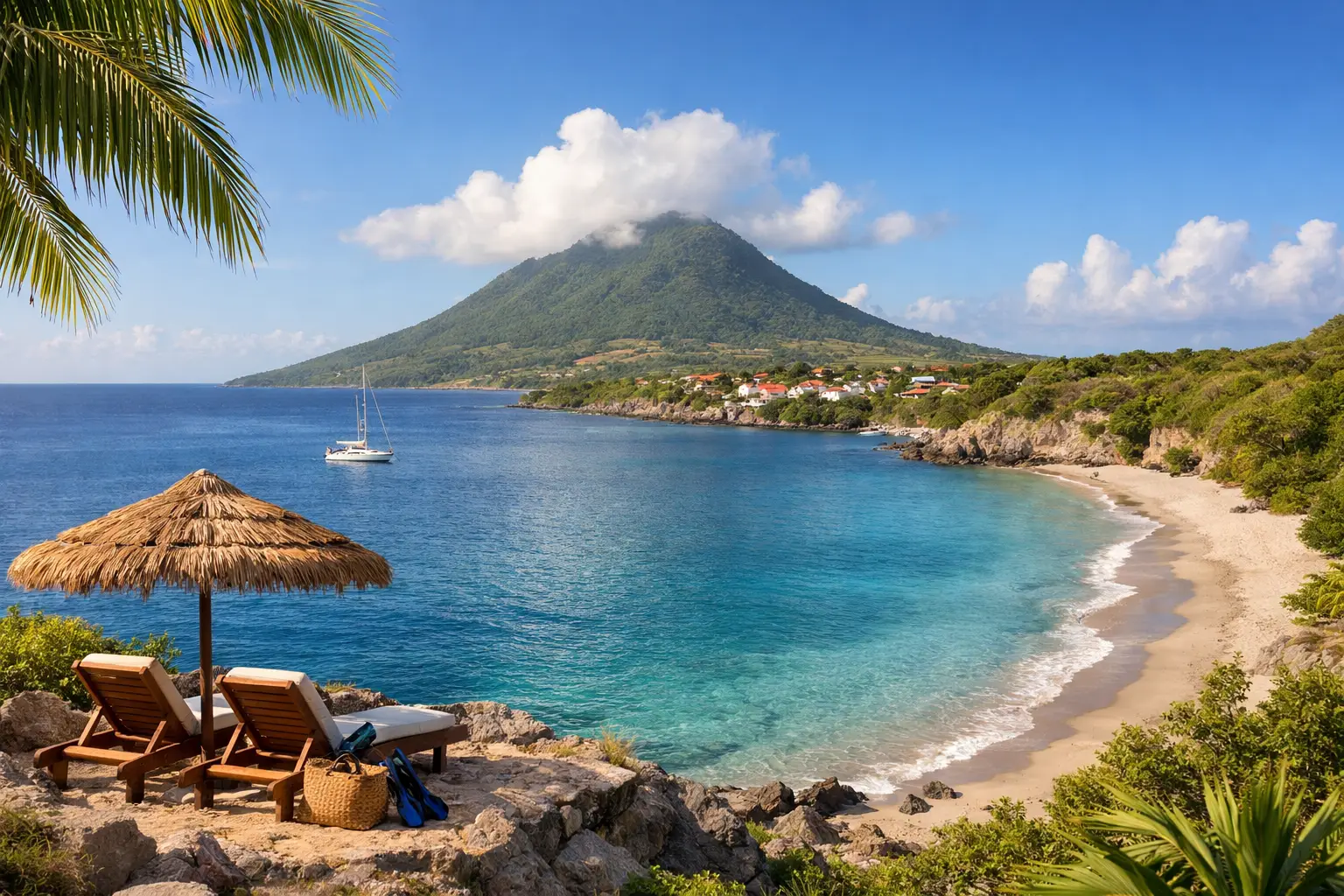
Oranjestad is not a place that rushes to introduce itself. Stone warehouses climb from the waterfront, goats wander the hillsides, and The Quill rises behind town like a patient invitation. This Statia travel guide is for travelers who prefer a Caribbean island with room to look around - and a story that rewards the looking.
St. Eustatius, known locally as Statia, is small enough to feel personal and layered enough to fill several memorable days. There are no sprawling resort corridors or packed beach clubs competing for your attention. Instead, the island offers exceptional diving, volcanic trails, preserved history, generous local conversation, and the rare pleasure of an itinerary that does not need to be overplanned.
Why Statia Feels Different
Statia is a Dutch Caribbean island shaped by trade, geology, and conservation. In the 18th century, its harbor was one of the busiest in the region, earning the island the nickname Golden Rock. Today, its historic Lower Town warehouses, forts, churches, and foundations give even a short walk through Oranjestad a strong sense of the past.
The island’s natural character is equally striking. The Quill, a dormant volcano, anchors the southern half of Statia, while the northern hills are drier, windier, and more exposed to wide Caribbean views. Offshore, protected waters support reefs, wrecks, turtles, and a remarkable density of marine life.
This is not the right island for travelers seeking a resort where every decision is made for them. It is a rare reward for couples, divers, hikers, history lovers, and independent travelers who enjoy choosing a small guesthouse, learning the local rhythm, and letting an afternoon remain unscheduled.
Getting to Statia and Planning Around Island Time
Most visitors reach Statia by regional flight, commonly connecting through Sint Maarten. Flight schedules can change with weather, seasonal demand, and operational conditions, so leave sensible connection time on both ends of your trip. If you are arranging an international itinerary, avoid building it around a tight same-day connection unless the schedule gives you real breathing room.
Sea connections may be available at certain times, but they should be treated as an option to confirm directly rather than a fixed part of your plan. Conditions on the water and service schedules can affect crossings. The same practical rule applies to rental vehicles, guided excursions, dive boats, and smaller accommodations: reserve ahead, then reconfirm close to arrival.
Statia’s airport, road network, and visitor infrastructure are small by design. That is part of the appeal, but it means flexibility is useful. Bring travel insurance, keep copies of essential documents, and check current entry requirements before departure. US travelers should also confirm passport validity rules and any transit requirements for their routing.
Where to Stay in Statia
Choose your accommodation based on the kind of days you want. A stay in or near Oranjestad puts restaurants, historic sites, and the harbor within easy reach. It suits travelers who like to walk to dinner, spend time photographing the old town, and begin mornings with the sea in view.
Hillside properties offer more privacy and, often, broader views toward the Caribbean. They can be especially appealing for couples and longer stays, though having a rental vehicle becomes more useful. Dive-focused travelers may prefer lodging that makes early boat departures and equipment logistics simple.
Availability is limited, particularly during popular travel periods. Statia is not an island of hundreds of interchangeable rooms, and that is precisely why the experience feels more considered. Book the stay that fits your pace before filling in the rest of the itinerary.
A Statia Travel Guide to the Island’s Best Days
Hike The Quill with a local guide
The Quill is Statia’s defining landscape, and the climb to its crater is one of the island’s essential experiences. Trails pass through increasingly lush vegetation as the elevation rises, with the crater revealing a green interior that feels unexpectedly removed from the dry Caribbean coast below.
A guide is required for crater hikes, and that requirement is worth welcoming. Local guides add context about the terrain, plants, weather, and safe pacing. Wear proper walking shoes, carry more water than you think you need, and start early when possible. The trail can be steep, muddy after rain, and demanding in midday heat.
For a less strenuous outing, explore the island’s other trails and viewpoints. The northern side of Statia has a different atmosphere, with open scrubland, volcanic formations, and expansive ocean views. Ask locally which routes suit current conditions and your fitness level.
Spend real time below the surface
Statia’s marine park is the reason many visitors first hear of the island. Divers come for healthy reefs, volcanic underwater topography, historical wrecks, and the chance to share the water with turtles, rays, reef fish, and, in season, larger pelagic visitors.
The experience is best approached with curiosity rather than a rigid wish list. Visibility, currents, weather, and seasonal wildlife all vary. A good dive operator will help match sites to your certification level and comfort, whether you are returning to the water after time away or looking for deeper, more technical terrain.
Snorkeling can also be rewarding, especially for travelers who want an easier way to experience the island’s clear water. Ask about access, conditions, and suitable sites on the day. Marine conservation is central to Statia’s appeal, so reef-safe habits matter: do not touch coral or wildlife, and follow local guidance closely.
Walk through a Caribbean trading story
Begin in Lower Town, where the remnants of Statia’s mercantile era are most visible. The old waterfront warehouses and stone foundations offer a powerful contrast to the quiet harbor of today. This was once a place of international commerce, political tension, and constant maritime movement.
Continue uphill through Oranjestad to visit historic churches, museums, and Fort Oranje. The fort’s setting above the bay makes it an excellent place to pause, take in the view, and understand why this small island mattered so much to so many nations.
History here is not only architectural. Statia’s past includes prosperity and trade, but also enslavement, colonial power, and the lives of people whose labor sustained the island’s wealth. Give these sites time. The strongest visit is not a checklist of landmarks but a chance to see the island’s beauty and complexity together.
Eat slowly and leave room for conversation
Dining in Statia tends to be intimate rather than theatrical. Expect locally owned restaurants, relaxed service, Caribbean flavors, and menus that may reflect what is freshest and available that day. Seafood, grilled dishes, island-style sides, and Dutch Caribbean influences all have a place at the table.
Reservations are wise for dinner, especially if your group is larger or you are visiting during a busy period. Hours can be limited, and some venues may not serve every day. Confirming plans is not a nuisance here. It is part of traveling well on a small island.
Practical Notes for a More Comfortable Stay
The official currency is the US dollar, which makes daily spending straightforward for American visitors. Bring a mix of payment options, including some cash, because card acceptance and payment systems can vary by business. English is widely spoken, alongside Dutch and local Caribbean expressions.
A rental car gives you the most freedom, particularly for trailheads, hillside stays, and quieter viewpoints. Distances are short, but tropical heat and steep roads can make walking less practical than a map suggests. Driving is generally relaxed, though livestock, pedestrians, and changing road surfaces call for attention.
Pack for sun, water, and uneven ground: a reusable water bottle, sun protection, a light rain layer, insect repellent, swimwear, and sturdy shoes will serve you well. For divers and hikers, bring any personal gear that makes the experience more comfortable, while checking in advance what can be rented locally.
How Long to Stay
Three nights is enough for a first impression, particularly if you focus on one major hike, a day on or in the water, and time in Oranjestad. Four to six nights makes more sense for travelers who want to dive several days, build in weather flexibility, or enjoy the island without treating every morning as a departure time.
The best Statia itineraries leave space between plans. Save one afternoon for a swim, a slow lunch, or a drive with no destination beyond the next view. On an island that asks you to notice more, unhurried time is not empty time. It is often the part you remember most.
