
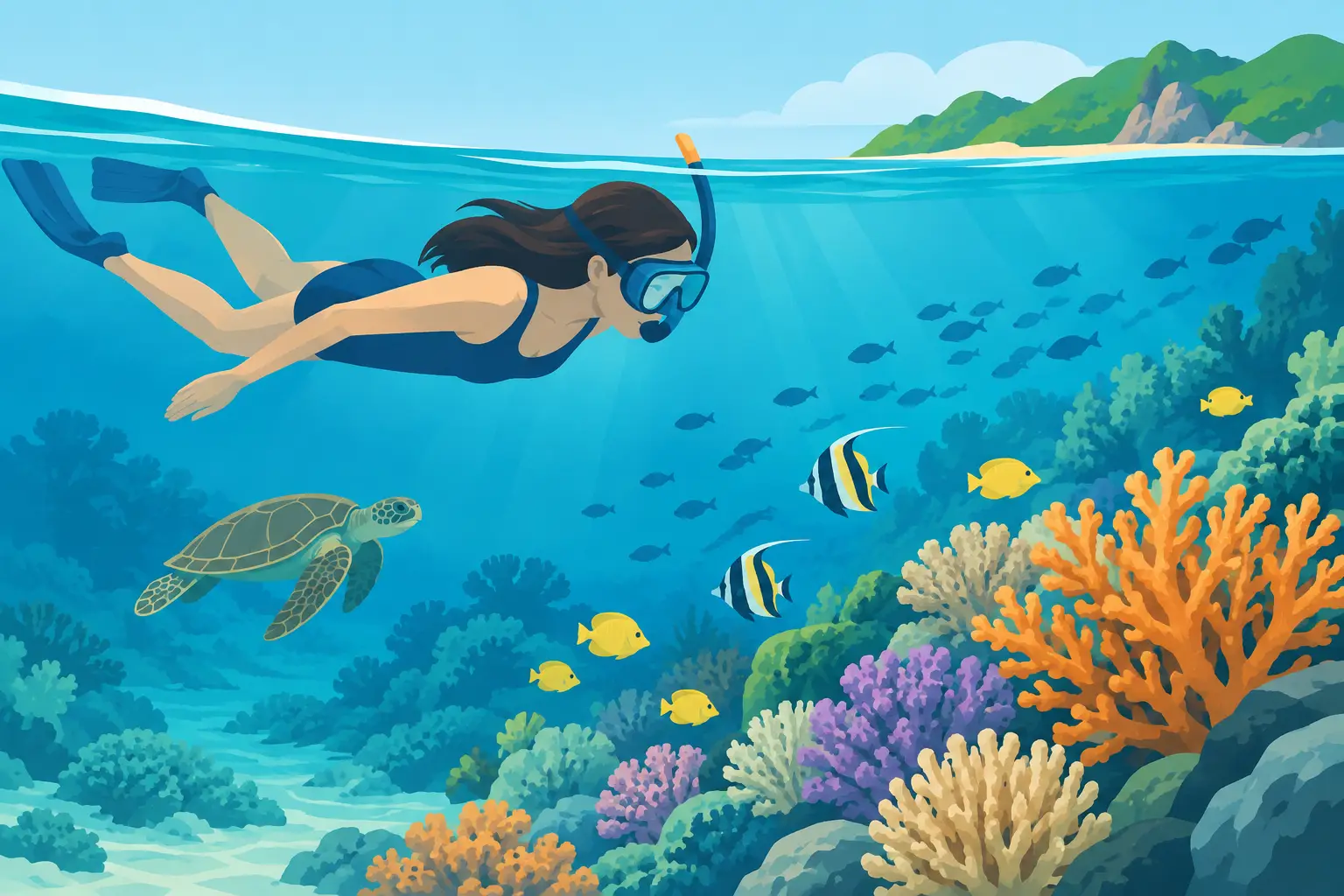
A reef can look indestructible from the surface: a bright scatter of coral heads beneath clear Caribbean water, fish moving between them, the seabed alive with color. Up close, it is far more delicate. One misplaced fin, one hand on coral for balance, or one discarded wrapper can interrupt a living system that takes years to recover. To protect reefs while snorkeling is not to make the experience restrictive. It is to see more clearly, move more lightly, and leave the water as extraordinary for the next visitor as it was for you.
How to Protect Reefs While Snorkeling
The best snorkeling habits begin before your mask ever meets the water. They are small choices, but on an island where the sea is part of daily life, those choices add up.
1. Start with a calm entry and an honest skill check
A rushed entry is where many accidental reef contacts happen. Before getting in, take a moment to adjust your mask, test your snorkel, and make sure your fins are secure. Enter where the water is deep enough to float rather than stand, and avoid using coral, rocks, or seagrass as a handhold.
If you are new to snorkeling or feel uneasy in open water, choose a sheltered site and go with a local guide or operator. A flotation belt or vest can be useful, not because you need to be held above the reef, but because it lets you relax and stay horizontal. The goal is quiet buoyancy: enough support to float without kicking hard or reaching down for balance.
Conditions matter more than ambition. A site that is gentle in the morning can become choppy with wind, current, or boat activity later in the day. There is no prize for pushing through discomfort. Save the farther swim for a day when the sea invites it.
2. Keep your body horizontal over the reef
Think of yourself as a slow-moving observer, not a swimmer racing from one coral head to another. Keep your body parallel to the surface, with your legs extended behind you, and look ahead rather than directly below. This simple position gives your fins more clearance and makes it less likely that you will brush fragile coral with a knee or foot.
Leave more space than you think you need. Coral can grow upward in unexpected shapes, and surge can move your body closer to the bottom between waves. In shallow water, even a few feet of distance can make all the difference. If you cannot float comfortably above a section of reef, move to deeper water or simply watch from farther away.
Coral is not stone. It is a living colony of tiny animals, often already under pressure from warming water, storms, disease, and sediment. A brief touch may seem harmless, but repeated contact from many visitors can break branches, remove protective tissue, and slow recovery.
3. Use short, deliberate fin kicks
Fins make snorkeling easier, but they can also stir up sand and strike coral when used carelessly. Keep your kicks small and slow, coming from the hips rather than bending sharply at the knees. This creates less turbulence and helps you stay aware of where your fins are passing.
Avoid the instinct to kick downward when you want to pause. Instead, stop moving, let your body float, and use a gentle sculling motion with your hands only at the surface if needed. Never push off the seafloor, even where it appears bare. Sand patches may shelter small creatures, while nearby seagrass provides food and refuge for marine life.
If your fins feel too long or awkward in a shallow area, that is useful information. Choose a deeper route, slow down, or ask your guide which part of the site is best suited to your experience level.
4. Choose sun protection with care - and cover up when you can
Sun protection is essential in the Caribbean, but not every product is equally considerate of the sea. Some sunscreen ingredients have raised concerns for their potential effects on coral and other marine organisms, especially where many swimmers enter the same small bay each day.
A mineral sunscreen using non-nano zinc oxide or titanium dioxide is often the more reef-conscious choice, though no label can make a product consequence-free. Apply it well before entering the water and use only what you need. Better still, rely on physical coverage where practical: a long-sleeve rash guard, swim leggings, a hat for time on shore, and shade during the strongest part of the day. These choices also reduce the need to reapply sunscreen after every swim.
Do not mistake a reef-friendly claim for permission to be careless. The larger protection comes from using less product, avoiding sprays that drift onto sand and water, and keeping any toiletries, oils, or cosmetics out of the sea.
5. Let wildlife set the distance
The most memorable encounters are rarely the closest ones. A turtle grazing in seagrass, a parrotfish working across a coral head, or a school of blue tangs shifting through the water will behave more naturally when given room. Do not chase, corner, feed, touch, or try to hold position directly above an animal.
A good rule is to watch until your presence changes the animal's behavior, then ease back. If a fish retreats repeatedly, a turtle alters course, or an eel disappears into its shelter, you are too close. Keep your hands to yourself even when curiosity is strong. Marine animals can be stressed by contact, and some can injure you in response.
Feeding fish is equally tempting and equally unhelpful. It changes natural feeding patterns, concentrates animals in busy areas, and can make wildlife more dependent on people. The reef already has a finely tuned menu. Let it stay that way.
6. Leave the site cleaner and quieter than you found it
Nothing belongs in the water except you and the gear you need. Secure snack wrappers, water bottles, loose straps, and waterproof phone cases before entering. If you spot a piece of litter that can be removed safely without stepping on reef or putting yourself at risk, take it with you.
The quieter part matters too. Keep splashing and shouting to a minimum near resting wildlife and avoid moving rocks or shells for a better photograph. A shell may become shelter; a rock may support algae, juveniles, or small invertebrates. The scene beneath your mask is not a display arranged for visitors. It is a neighborhood with its own rhythms.
Photography deserves the same restraint. Set your camera before approaching a subject, keep one eye on your surroundings, and never brace yourself on the reef to frame a shot. A slightly wider photo is always worth more than a damaged coral head.
7. Snorkel with people who know the water
On St. Eustatius, local operators and guides bring more than equipment and route planning. They understand changing conditions, entry points, marine-park etiquette, and the less obvious places where current or shallow reef can catch an inexperienced swimmer off guard. Their knowledge can turn a pleasant swim into a more attentive encounter with the island's underwater life.
Ask questions before you go out: Is the site suitable for your comfort level? Is there current? Where should you enter and exit? Are there seasonal wildlife considerations? Good operators welcome this kind of preparation because it protects guests as well as the reef.
Small-group outings are often a thoughtful choice for nature-focused travelers. They allow more individual guidance and reduce the crowding that can make shallow sites difficult to enjoy responsibly. Availability can be limited, especially around busy travel periods, so confirm schedules directly and reserve ahead when you can.
Protect Reefs While Snorkeling, One Visit at a Time
A healthy reef rewards patience. Stay afloat, keep your distance, and allow the underwater world to come to you. You may notice more that way: the tiny cleaner shrimp at work, the shifting color of a juvenile fish, the careful architecture of coral that could outlast a human lifetime if given the chance. That kind of attention is one of the rare rewards of snorkeling in St. Eustatius - and one every visitor can help preserve.
