
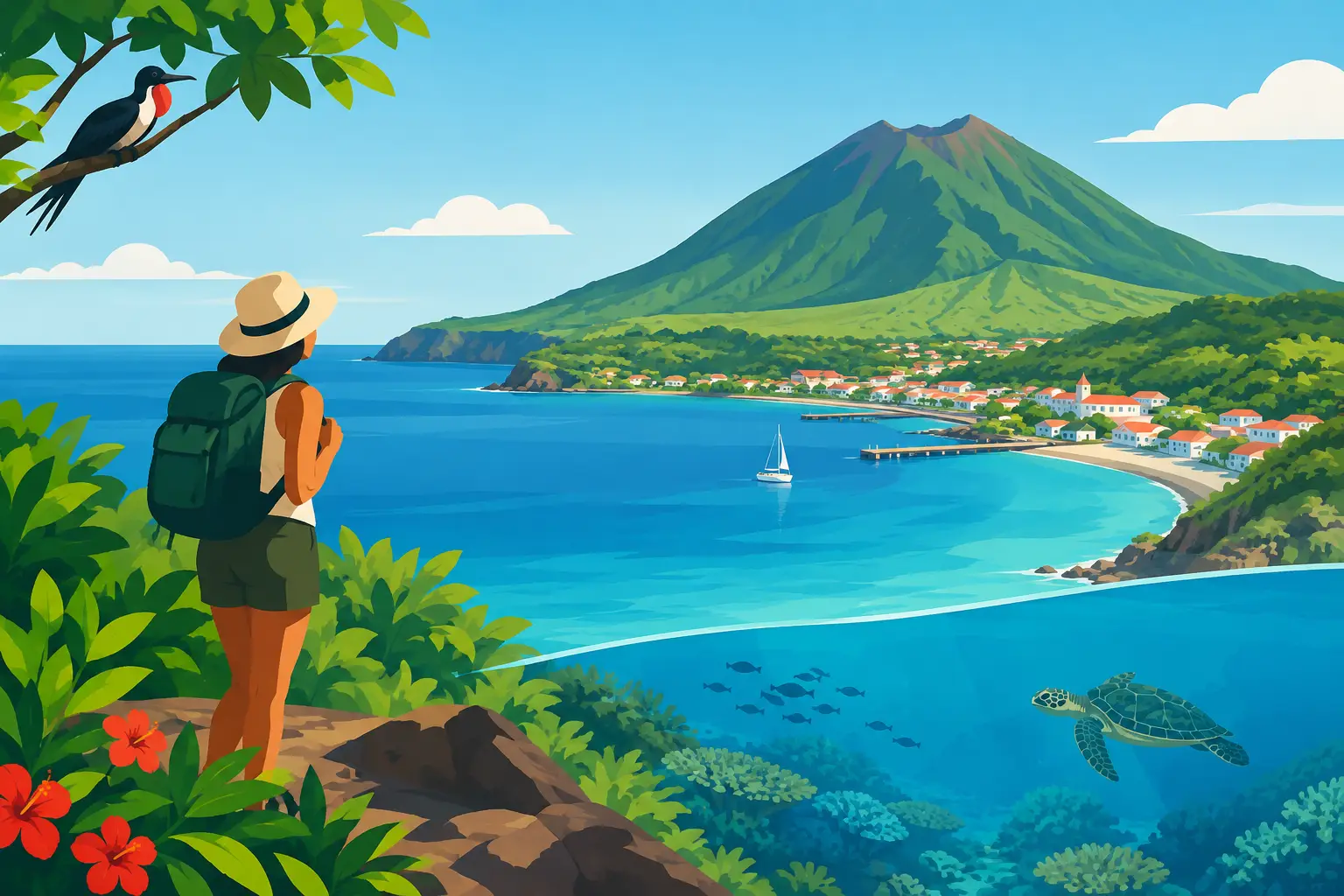
The clearest sign of Caribbean ecotourism is not a bamboo straw or a sign at a trailhead. It is an island where the reef still has room to recover, a hike is led with care for the landscape, and visitors understand that their presence has an effect. On St. Eustatius, often called Statia, nature is not a backdrop to a resort stay. It is the reason to come.
This small Dutch Caribbean island rewards travelers who would rather discover than arrive. Its slopes rise to The Quill, a dormant volcano with a cloud-forest crater; its shoreline meets protected waters alive with coral, turtles, reef fish, and dramatic volcanic formations. Add centuries of layered history, a close-knit community, and an intentionally unhurried pace, and the result is a rare kind of Caribbean escape.
What Caribbean Ecotourism Should Mean
Ecotourism is sometimes used too loosely. A hotel can ask guests to reuse towels while the wider trip still depends on crowded beaches, imported experiences, and little connection to local life. Thoughtful travel asks more: Does tourism support conservation? Are local people paid and respected for their knowledge? Does the visitor leave a lighter footprint while gaining a deeper sense of place?
On Statia, those questions are tangible. The island's scale limits what a day can hold, and that is part of its value. There are no vast resort strips or busloads moving from attraction to attraction. Visitors book dive operators, arrange guided hikes, eat at locally run restaurants, and spend time in places where the island, as it feels, remains close at hand.
That does not make a visit impact-free. Air travel and inter-island connections carry a real environmental cost, and supplies must travel to a remote island. The more honest approach is to stay longer if possible, choose experiences run by local people, and spend deliberately once you arrive rather than treating Statia as a quick photo stop between larger islands.
A Marine Park Worth Moving Slowly Through
For many visitors, the Statia National Marine Park is the heart of the trip. Divers come for healthy reefs, volcanic pinnacles, wrecks, and the possibility of encounters that feel wonderfully unprogrammed. A morning underwater might bring schooling fish circling a reef wall, a hawksbill turtle passing overhead, or the quiet geometry of a sponge-covered wreck.
Good diving here is not built on spectacle alone. It depends on respectful boat practices, experienced local guidance, sensible buoyancy, and a willingness to let the sea set the terms. Conditions can change with weather, currents, and season. The most rewarding visitors arrive with curiosity rather than a checklist of guaranteed sightings.
Snorkelers can also find meaningful ways into the island's marine world, though access and conditions matter. Ask locally which sites are suitable on the day, never stand on coral, and keep a generous distance from turtles and other wildlife. Reef-safe habits are simple, but they matter most when everyone follows them.
The Quill and the Value of a Local Guide
The Quill is not a hill to be rushed. Its forested slopes hold dry woodland, lush crater vegetation, birds, lizards, and views that place the Caribbean Sea in every direction. Hiking here offers a different kind of island memory: damp earth underfoot, the call of birds through the trees, and a sudden opening in the canopy that makes the climb worthwhile.
Some routes require a guide, and even where a hike appears straightforward, local guidance adds far more than navigation. Guides help visitors read the terrain, understand native plants and island history, and move safely in heat, mud, or changing weather. They also help protect sensitive areas from the cumulative damage that comes when travelers stray from established paths.
Bring water, proper shoes, sun protection, and patience. The island's warmth can make a modest distance feel demanding, particularly around midday. A slower start and an early departure often make for a better experience than trying to fit a crater hike between breakfast and an afternoon flight.
Heritage Is Part of the Ecosystem
Caribbean ecotourism is not only about birds, reefs, and green hills. On Statia, heritage gives the landscape its deeper dimension. In Oranjestad, historic buildings, ruins, and the old waterfront speak to an era when this small harbor played an outsized role in Atlantic trade. The island's past contains prosperity and conflict, commerce and colonialism, enslavement and resistance. It deserves attention beyond the postcard view.
Walking the historic districts with time to spare connects nature travel to the human story of the island. A ruined warehouse or weathered stone wall is not decoration. It is evidence of lives and systems that shaped the land, its communities, and the sea routes around it.
Travelers can support this living heritage in ordinary ways: listen when local hosts share their perspective, choose independent businesses, and avoid treating private neighborhoods or sacred places as open-air sets. Respect is not an add-on to responsible travel. It is the foundation.
How to Plan a Lower-Impact Stay on Statia
A thoughtful trip does require planning. St. Eustatius has limited rooms, a small number of specialist operators, and transport schedules that can shift with weather or operational needs. That limited capacity is not a flaw to overcome. It is a reason to book ahead and leave breathing room in the itinerary.
Choose accommodations based on how you intend to spend your days. Divers may value easy coordination with operators and an early start. Hikers may prefer a quiet base with access to trails or town. Couples often find that a smaller property, a rental car or local transport plan, and a few unhurried dinners create more freedom than a tightly packed schedule.
Once on island, use water and energy thoughtfully, carry a reusable bottle where practical, and avoid taking shells, coral, plants, or stones as souvenirs. Buy meals, crafts, and services locally when you can. The money spent with a local guide, a family-run restaurant, or an island operator stays closer to the place that made the visit possible.
There is a trade-off. Statia may not suit travelers looking for nightly entertainment, constant shopping, or a long menu of plug-and-play excursions. Connectivity, inventory, and schedules can be more limited than on major Caribbean islands. For travelers willing to exchange convenience for character, that restraint is often the reward.
Let the Island Set the Pace
The best days on St. Eustatius often combine only one or two meaningful experiences. Dive in the morning, then linger over lunch. Hike The Quill on another day and leave the afternoon open for a swim, a walk through Oranjestad, or a conversation that was not on the itinerary. Weather may change plans, and the island may invite you to do less than expected.
That is not lost time. It is a chance to travel with greater attention - to notice the movement of clouds around the volcano, the color of the water from a hillside, and the people who make a small island feel generous rather than anonymous.
Come prepared, make reservations early, confirm transport directly, and leave room for the unexpected. On Statia, the most responsible way to see more is often to slow down enough to truly be there.
